
Licensed Asbestos Removal Contractor

Asbestos Insulating Board (AIB) Removal.

HSE-licensed removal of asbestos insulating board from commercial, industrial, educational and public buildings across England and Wales. Full enclosure, air monitoring and clearance certificate included as standard.

HSE Licensed — High Risk AIB Work 4-Stage Clearance & Air Test Included Nationwide Coverage 4.9★ — 359 Google Reviews
40k+ Asbestos Removals Completed
720+ Tonnes Removed Every Year
20+ Years HSE Licence Holder
100% Safety Record Since 2003

What Is Asbestos Insulating Board?

AIB — High Risk Asbestos Material in Commercial Buildings

Asbestos Insulating Board (AIB) is one of the most hazardous asbestos-containing materials (ACMs) found in UK buildings. Used extensively from the 1950s through to the 1980s for fire protection, thermal insulation and soundproofing, AIB typically contains between 15% and 40% asbestos fibre by weight — a far higher concentration than most other ACMs.

AIB was used in ceiling tiles, partition walls, fire doors, boiler room cladding, service duct linings and wall panels. It can look almost identical to standard plasterboard, which means it is frequently discovered during renovation or demolition work — often unexpectedly.

Under the Control of Asbestos Regulations 2012 (CAR 2012), all work on AIB is classified as licensable work and can only be carried out by an HSE-licensed contractor. AIB Solutions holds a full HSE license for all categories of licensed asbestos work and has been removing AIB from commercial and industrial buildings since 2005.

⚠ You cannot legally remove AIB yourself

AIB is a licensable asbestos material under CAR 2012. Any disturbance, removal or disposal must be carried out by an HSE-licensed contractor. Attempting to remove AIB without a licence is a criminal offence and carries serious health risks.

HSE Licensed

Full HSE licence for all licensable AIB work. Licensed since 2005, renewed without interruption.

4-Stage Clearance

Mandatory 4-stage clearance procedure with independent air testing on every AIB removal job.

Directly Employed Teams

No subcontractors. Every operative is directly employed and individually trained and competent for AIB work.

Nationwide

Commercial and industrial AIB removal across England and Wales. Fast mobilisation on all projects.

Where We Remove AIB

Common AIB Locations in Commercial & Industrial Buildings

AIB was used throughout buildings in a wide range of applications. It can be difficult to identify visually — professional sampling is always required to confirm its presence before any work begins.

Ceiling Tiles & Suspended Ceilings

AIB ceiling tiles were widely used in offices, schools, hospitals and public buildings. Often found in grid suspended ceiling systems installed between 1950–1985.

Licensable Work

Partition Walls & Linings

AIB was used as a low-cost alternative to plasterboard in partition walls, corridor linings and room dividers. It can be almost impossible to distinguish visually from standard board.

Licensable Work

Fire Doors & Door Panels

AIB was commonly used as fire-resistant infill in door panels and frames, particularly in commercial buildings, schools and industrial premises. Replacement of fire doors often triggers AIB discovery.

Licensable Work

Boiler Rooms & Plant Rooms

AIB was extensively used in boiler rooms and plant rooms as ceiling panels, boxings, plinths and firebreaks.

Licensable Work

Service Risers & Duct Linings

Vertical service risers and horizontal duct linings in multi-storey commercial buildings frequently contain AIB used as fire protection. Often found running throughout the full height of a building.

Licensable Work

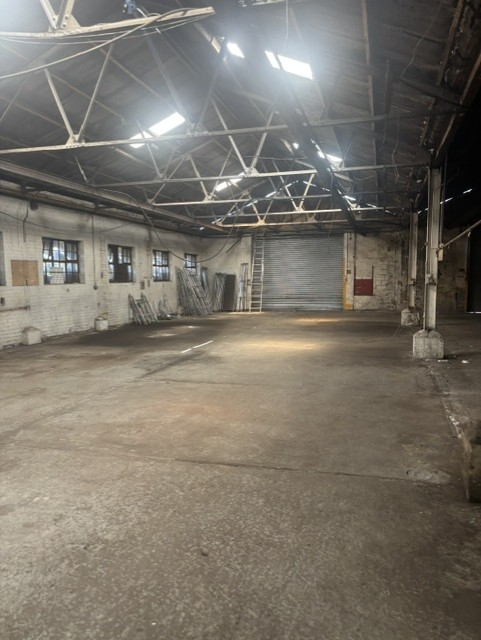
Industrial Buildings & Warehouses

Pre-1985 factories, warehouses and industrial units frequently contain AIB as wall cladding, ceiling boards and partition panels. AIB removal is often a prerequisite for refurbishment or change of use.

Licensable Work

How We Work

Our AIB Removal Process

Every AIB removal project follows a rigorous, legally mandated process. As an HSE-licensed contractor, we are required to follow strict procedures at every stage — from initial notification to final clearance.

Regulatory Compliance

Control of Asbestos Regulations 2012 (CAR 2012)

HSE License

HSG247 — Asbestos: The Licensed Contractors' Guide

Hazardous Waste Regulations 2005 — Safe Disposal

1

Survey & Material Confirmation

We can use any existing information that you may have, such as an asbestos management, refurbishment or demolition survey, or a sample test report. This will confirm the presence, location and condition of the AIB. If you do not have this information, we can advise and help with the best option for your needs.

2

HSE Notification & Plan of Work

We notify the HSE at least 14 days before work begins, as required by law for all licensable asbestos work. A full Plan of Work and Risk Assessments are prepared covering safe systems of work, enclosure requirements, negative pressure units and air monitoring.

3

Controlled Enclosure & Removal

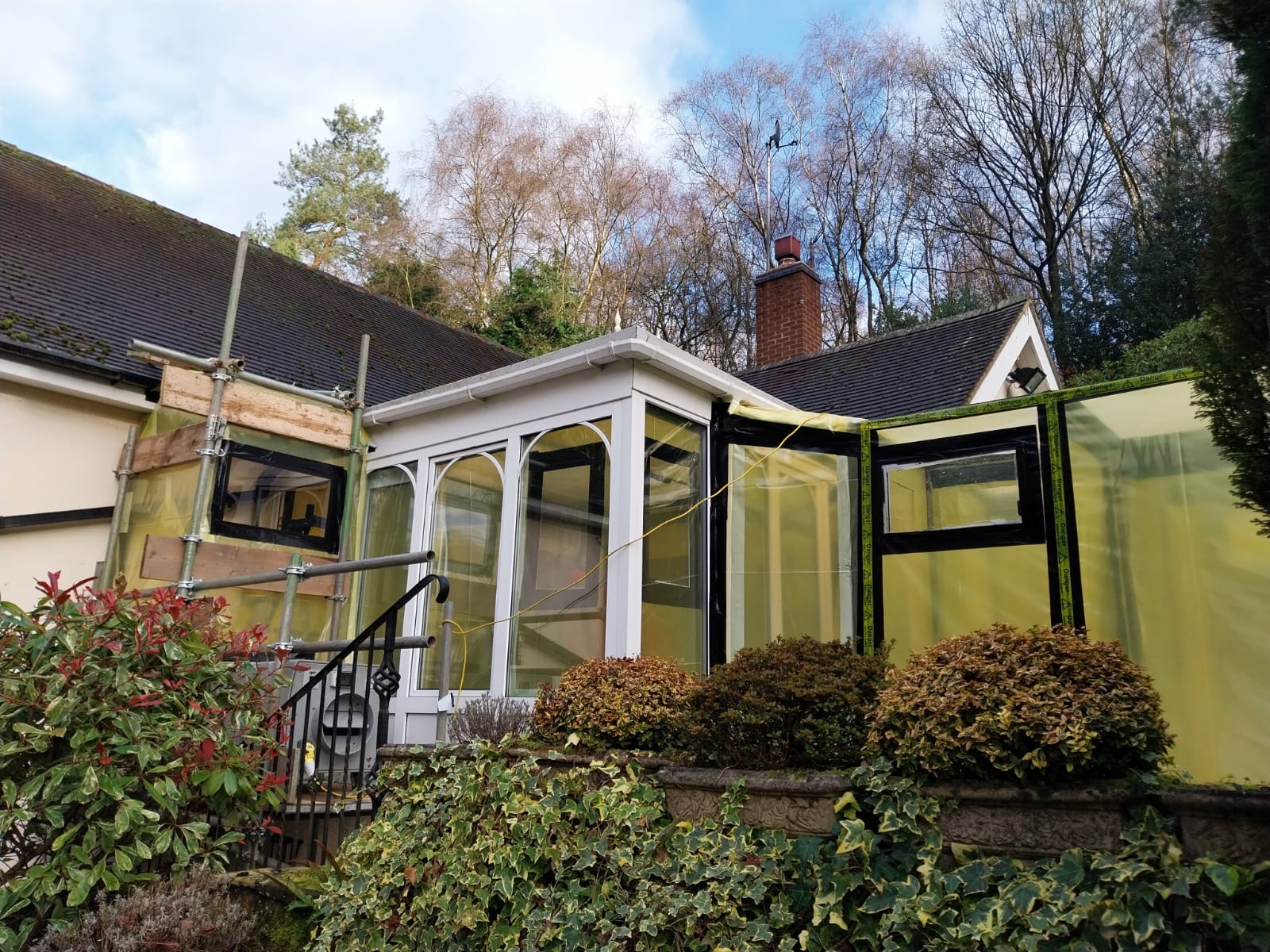
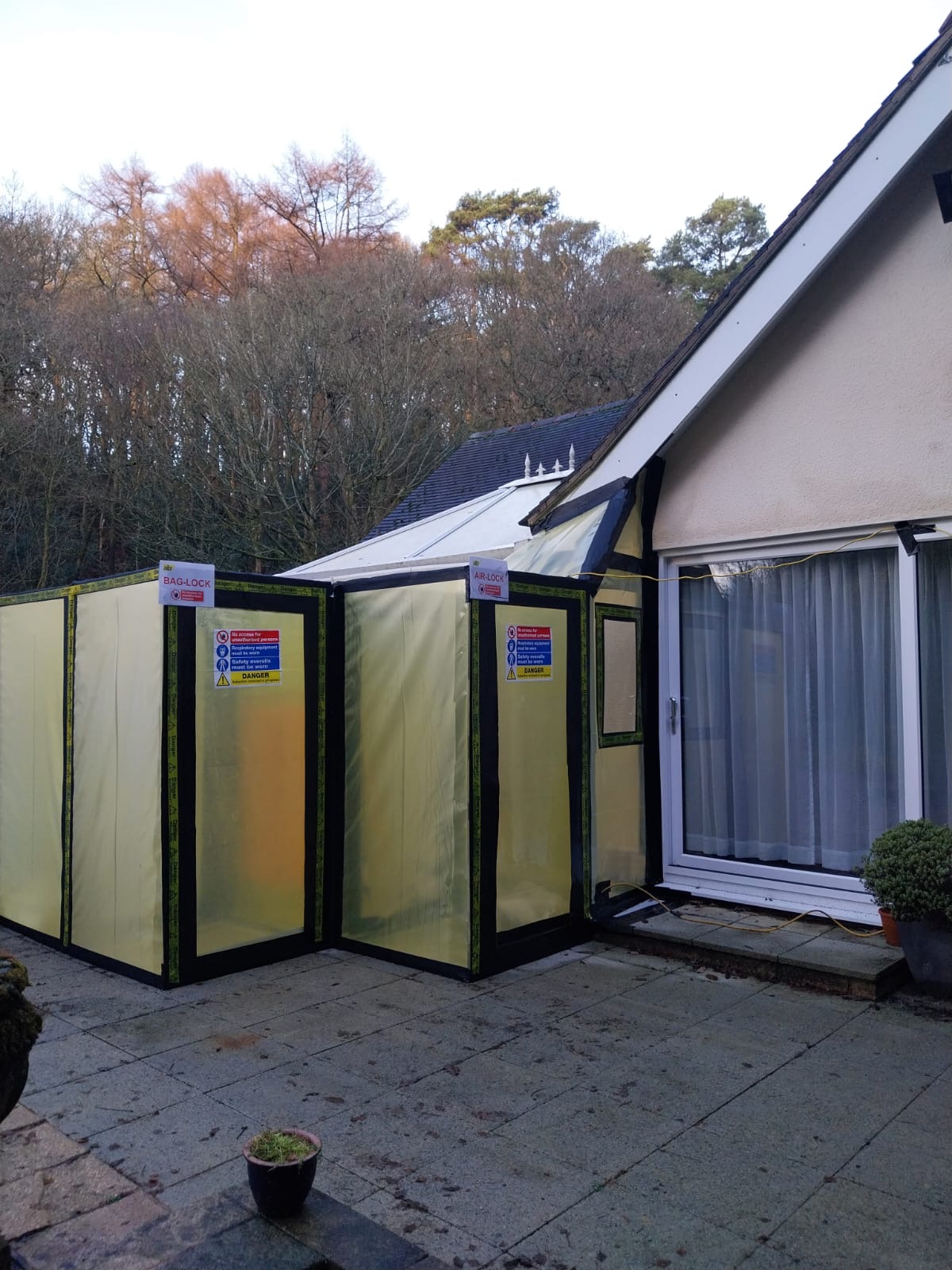
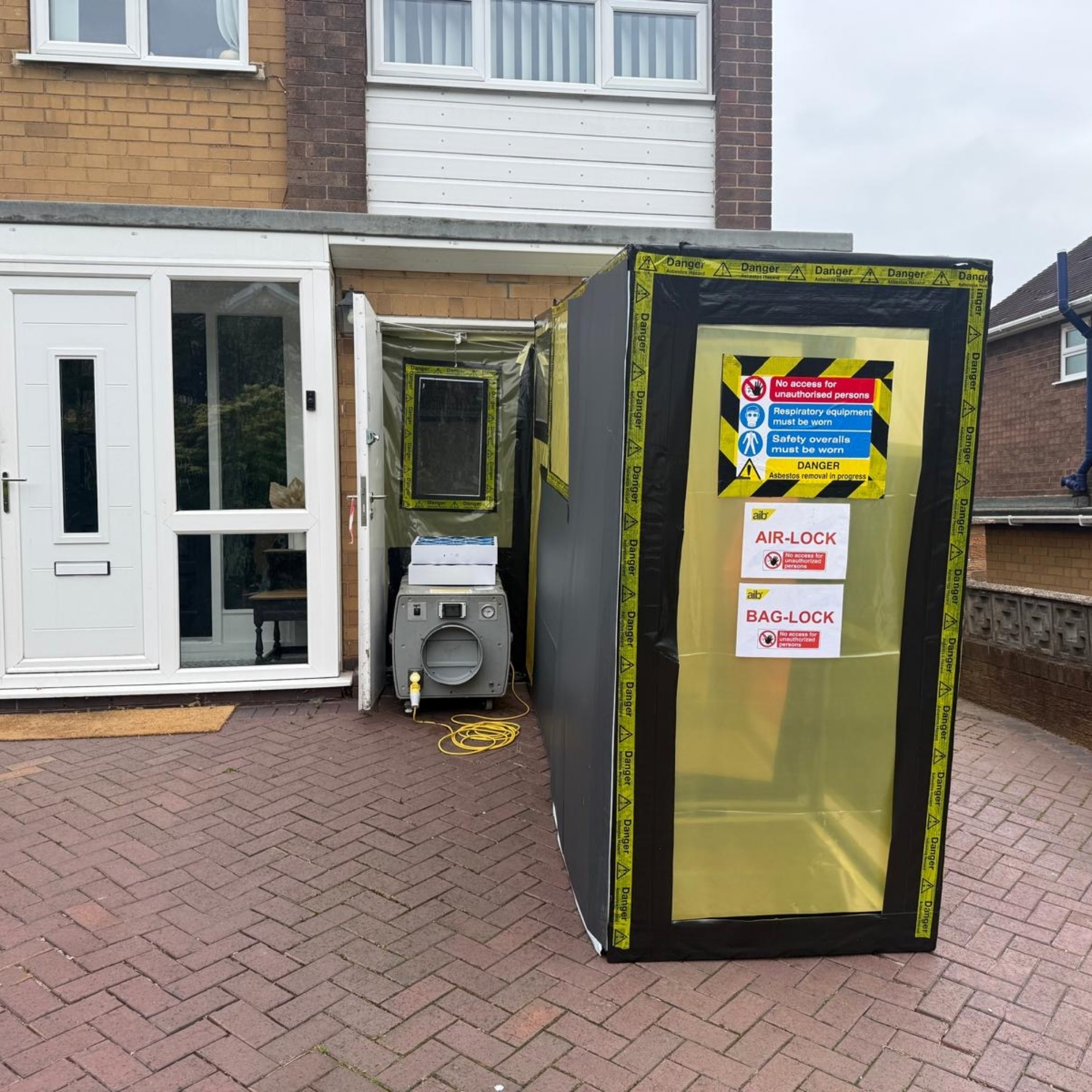
A sealed enclosure with negative pressure unit (NPU) is established to contain fibre release. Our licensed operatives, wearing full RPE and PPE, carry out careful removal of AIB. In high risk areas continuous air monitoring is conducted throughout to confirm our control measures continue to be effective.

4

4-Stage Clearance Procedure

Following removal and thorough decontamination of the enclosure, a mandatory 4-stage clearance is undertaken by an independent UKAS accredited laboratory. This includes a thorough visual of the enclosure and once satisfactory, an air test to ensure that the area is safe for normal re-occupation. The enclosure will not be dismantled until all stages are passed.

5

Licensed Disposal & Documentation

All AIB waste is double-bagged, labelled and transported to a licensed asbestos disposal facility. Full consignment notes are issued as required under Hazardous Waste Regulations. You receive a clearance certificate, air test results and all waste documentation on completion.

Sectors We Work In

AIB Removal Across All Commercial & Industrial Sectors

We carry out AIB removal for a wide range of clients across the public and private sector. Every sector has specific compliance requirements — we understand them all.

Education sector

Education & Schools

AIB ceiling tiles and wall panels are extremely common in schools built between 1950 and 1985. We work with academy trusts, local authorities and contractors to remove AIB during school holiday periods and out of hours — minimising disruption to the school calendar.

Commercial sector

Commercial Offices & Retail

Office refurbishments and retail fit-outs in pre-2000 buildings frequently require AIB removal from suspended ceilings, partitions and fire door panels. We work with principal contractors and FM teams to deliver AIB removal within tight programme timescales.

Industrial sector

Industrial & Manufacturing

Pre-1985 factories, warehouses and industrial units regularly contain significant quantities of AIB in boiler rooms, plant rooms and as cladding and ceiling panels. We have extensive experience delivering large-scale AIB removal in live and decommissioned industrial environments.

Public sector

Public Sector & Councils

Local authorities, NHS trusts and housing associations frequently commission AIB removal as part of planned maintenance, refurbishment programmes and void property clearances. We understand public sector procurement requirements and can work within framework contracts.

Construction sector

Construction & Refurbishment

Principal contractors regularly engage us as their HSE-licensed asbestos sub-contractor to carry out AIB removal ahead of or during wider refurbishment programmes. We integrate with construction programmes and provide the documentation contractors need to close out asbestos obligations.

Domestic sector

Domestic & Residential

AIB can be present in some domestic properties — particularly in garage ceilings, soffits and verge boards. Where AIB is identified in a home, we provide the same licensed removal service with the same rigorous clearance procedure.

Why Choose AIB Solutions

The Specialist You Need for AIB Removal.

Not all asbestos contractors are the same. AIB is one of the most hazardous categories of asbestos work — and it requires a contractor with the right licence, the right equipment and the right experience. We've been removing AIB for over 20 years with a 100% safety record.

G
★★★★★

4.9 out of 5 — 359 Google reviews

Related Services

HSE Licensed Since 2005

Full HSE licensing for all categories of licensable asbestos work including AIB. 20+ years without interruption to our licence.

Directly Employed Licensed Operatives

No subcontractors. Every operative working on AIB is directly employed and are trained, skilled, competent and experienced.

Complete Documentation Package

4-stage clearance certificate, independent UKAS air test results, waste consignment notes and a full completion report — every time.

Fast Mobilisation

We quote quickly and mobilise quickly. Most AIB removal projects can be quoted within 24 hours and mobilised within days of instruction.

Free Expert Advice

Not sure if you have AIB? Call us. We provide free advice on identification, survey requirements and your legal obligations — no obligation, no hard sell.

HSE Licensed AIB Removal

Need AIB Removed?
Talk to Our Licensed Team.

Free expert advice on every call. We handle all survey, removal, air testing, clearance certification and waste disposal — from a single source, fully licensed and documented.

FAQs

Asbestos Insulating Board — Common Questions

Have a question that isn't answered here? Call our team for free expert advice — no obligation.

01782 613773
What is Asbestos Insulating Board (AIB)?

Asbestos Insulating Board (AIB) is a dense board material used widely in UK buildings from the 1950s to the 1980s for fire protection, thermal insulation and soundproofing. It typically contains between 15% and 40% asbestos fibre by weight — a much higher concentration than most other asbestos-containing materials — and is classified as a high-risk ACM under UK regulations.

Where is AIB typically found?

Common AIB locations include ceiling tiles, panels and suspended ceilings, partition walls and linings, fire door panels, boiler room and plant room cladding, service risers, duct linings and wall panels in industrial buildings. It can look almost identical to plasterboard, which is why professional sampling is the only reliable way to confirm its presence.

Why does AIB require a licensed contractor?

Under Control of Asbestos Regulations 2012 (CAR 2012), all work on AIB is classified as licensable asbestos work. This means it can only legally be carried out by a contractor holding a current HSE asbestos removal licence. The high asbestos fibre content of AIB means that disturbance without proper controls poses a serious health risk. Unlicensed removal of AIB is a criminal offence.

How do I know if I have AIB in my building?

You cannot confirm the presence of AIB by sight alone — it looks very similar to plasterboard and other board materials. The only reliable method is professional sampling and laboratory analysis. We carry out asbestos surveys and bulk sampling across the UK and can confirm whether AIB is present before any work begins. If you suspect AIB, do not disturb or damage the material — call us for advice.

Do you need to notify the HSE before removing AIB?

Yes. Under the CAR 2012, the HSE must be notified at least 14 days before any licensable asbestos work begins. We handle all HSE notification as part of our service — you don't need to do anything. This is one of the key reasons it's essential to use a licensed contractor rather than attempting to remove AIB independently.

What documentation will I receive after AIB removal?

Following the safe and successful removal of the AIB, you will receive the 4-stage clearance report provided by the independent UKAS accredited analyst as well as the hazardous waste consignment note confirming the asbestos has been disposed of responsibly and safely. These documents are legally required and essential for building owners, contractors and insurers that the work was carried out safely and legally.

Can AIB be encapsulated rather than removed?

In some circumstances, AIB in good condition may be managed in place rather than removed — typically where the material is undisturbed, in good condition and not subject to ongoing disturbance. However, encapsulation work on AIB is also licensable, and any encapsulation programme requires a full survey and ongoing management plan. We advise on the most appropriate approach for each situation.

How much does AIB removal cost?

Cost depends on the volume and location of AIB, site access, programme requirements and the complexity of enclosure required. We provide free, itemised quotations with no hidden costs. Call 01782 613773 or submit an enquiry and we aim to respond same day.

// here to help.

Get in touch.

Free expert advice on every call. We'll tell you exactly what you have, whether it needs removing and what it will cost — no obligation, no hard sell.

Thank you! Your submission has been received!
Oops! Something went wrong while submitting the form.
Call: 01782 613773
Get a Free Quote
Tap to get in touch — same-day response
✓ Received! We'll call you shortly.
AIB Solutions
Free Quote — No Obligation
Same-day response — usually within the hour

Get Your Free Asbestos Quote

Tell us what you need — clear quote, no pushy sales.

HSE Licensed 4.9★ 359 Reviews Same-Day Response Nationwide

🔒 Your details are kept private and never shared.

Quote Request Received!

We'll be in touch shortly — usually within the hour. Urgent? Call 01782 613773.