
The Project
Another project successfully completed for our local council in Stoke-on-Trent: the safe removal and disposal of asbestos insulating board (AIB) verge panels across 26 elevations.
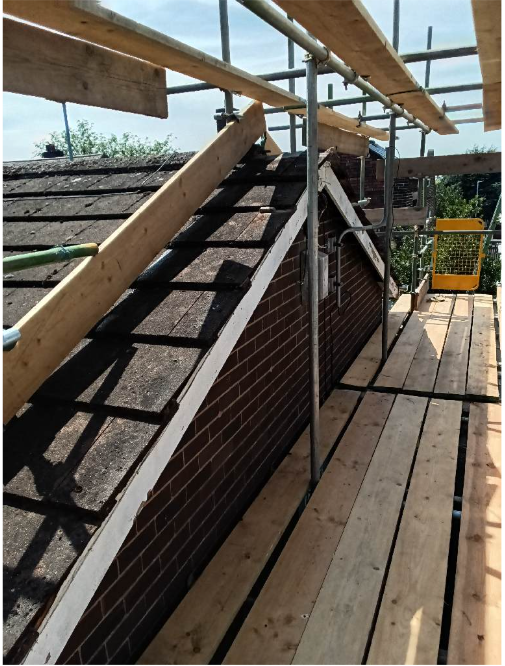
Verge panels sit at the edge of a roof, closing the gap between the roof covering and the gable wall. On housing built from the 1950s through to the mid-1980s they were very commonly formed in AIB, chosen at the time for exactly the properties that now make it a problem: lightweight, weather-resistant and fire-retardant.
AIB is a licensable material under the Control of Asbestos Regulations 2012. It is friable, meaning it releases fibres readily when disturbed, and its removal may only be undertaken by an HSE-licensed contractor working under fully controlled conditions.
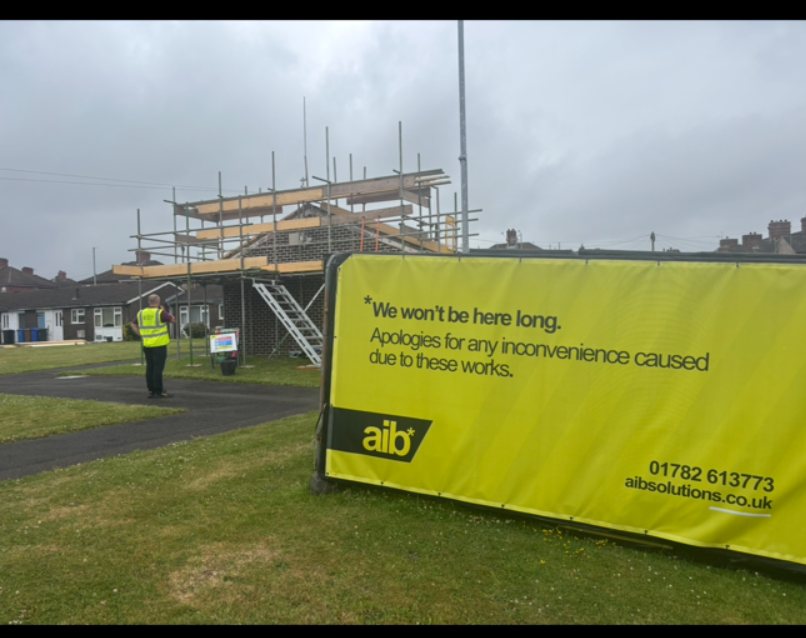
Why the Condition Changed the Approach
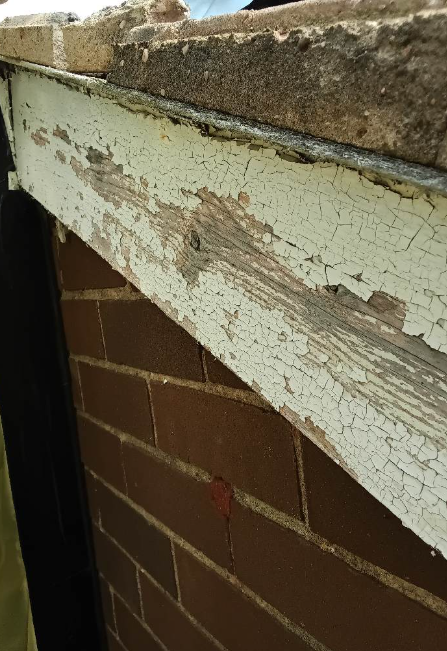
The deciding factor on this project was the condition of the material. The AIB verge panels had deteriorated significantly — unsurprising for boards that have spent five decades or more exposed to weather at the most vulnerable point on a roof.
Deteriorated AIB behaves very differently to sound AIB. Weathering breaks down the surface, water ingress causes delamination, and fixings work loose. Material in that state cannot be removed intact; it fragments during handling, and fragments release fibres. Poor condition raises the risk profile considerably and dictates a more controlled approach than the same panels in good order would have required.
All works were therefore undertaken under fully controlled conditions, with safety and compliance at the forefront throughout — wet methods to suppress fibre release, full PPE and RPE, controlled lowering rather than dropping, immediate double-bagging of arisings, and no dry breaking at any stage.
Scaffold Access & Working at Height
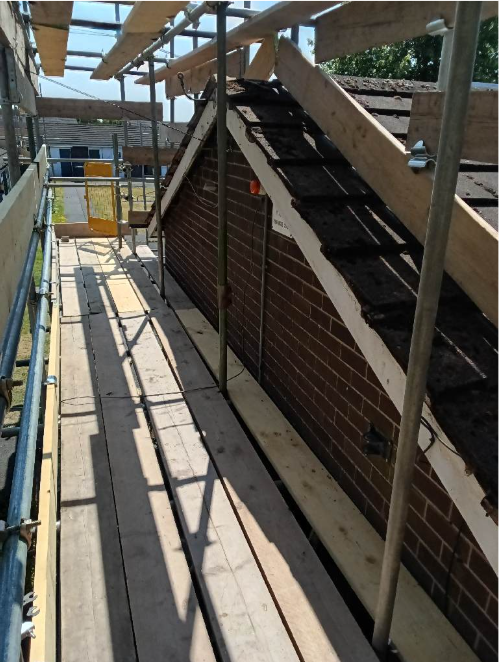
Verge panels sit at high level by definition, and working on deteriorated AIB at height is a job that lives or dies on the quality of the access.
Licensed scaffold access was provided by MG Scaffolding, whose work allowed our operatives to reach each verge safely, work in a stable position at the correct height, and control the material properly as it came away. Fragile material and awkward access is the combination that causes incidents in this industry — get the platform right and the removal itself becomes methodical.
A big thank you to MG Scaffolding for their part in this. Getting 26 elevations completed safely was very much a joint effort.
The Licensed Process
Every stage followed the statutory sequence required for licensable asbestos work:
- Plan of work — a written methodology covering removal technique, control measures, access arrangements and waste handling, produced before any work began.
- HSE notification — the mandatory 14-day notification submitted to the Health and Safety Executive under Regulation 9.
- Controlled removal — wet methods throughout, full PPE and RPE, controlled lowering of material, and immediate double-bagging in UN-approved sacks.
- Waste disposal — all arisings removed under our Environment Agency hazardous waste carrier registration to a licensed disposal facility, with consignment notes issued for every load.
- Clearance and certification — four-stage clearance procedures and full documentation issued to the client on completion.
For a fuller explanation of what licensed removal involves from the client's side, see our guide on what professional asbestos removal involves.
Working With Local Authorities
Programmes like this one are a substantial part of what we do. Council and housing association stock built during the peak asbestos decades carries AIB in repeating locations — verge panels, soffits, airing cupboards, inter-property fire-stopping — which means the same issue recurs across dozens or hundreds of near-identical properties.
That repetition suits programmed work far better than reactive work. Surveying and removing across a batch of elevations in one mobilisation is cheaper per property, less disruptive to residents, and produces a consistent documentation set for the client's asbestos register.
It also requires a contractor who understands the resident-facing side: clear communication about what's happening and when, working around occupied homes, keeping sites tidy, and finishing when you said you would. More on our approach on the local authorities and housing providers page, and in our social housing case study.
The Outcome
All 26 elevations across the Stoke-on-Trent site were completed safely and successfully, with the deteriorated AIB removed under fully controlled conditions and disposed of legally with complete documentation issued to the council.
The project was managed by Mitchell Beardmore, Contracts Manager at AIB Solutions, working alongside MG Scaffolding on access. A great team effort from start to finish.
Frequently Asked Questions
What are AIB verge panels?
Verge panels close the gap between the roof covering and the gable wall at the edge of a roof. On properties built between the 1950s and mid-1980s they were frequently formed in asbestos insulating board, which was lightweight, weather-resistant and fire-retardant. AIB is a licensable material, so removal requires an HSE-licensed contractor.
Does deteriorated AIB need removing?
Usually, yes. AIB in sound, sealed condition can sometimes be managed in place and monitored. But weathered verge panels that have delaminated, lost surface integrity or worked loose are a different proposition — they release fibres and will continue to deteriorate. At that point removal under controlled conditions is the appropriate course.
Why does AIB removal need scaffolding?
Verge panels are at high level, and deteriorated AIB has to be handled carefully and lowered under control rather than dropped. That requires operatives to be working from a stable platform at the correct height. Ladders don't allow the controlled handling that fragile licensable material demands.
How long does a project like this take?
It depends on the number of elevations, the access arrangements and the condition of the material. The statutory 14-day HSE notification period applies before licensed work can begin, so early engagement helps considerably on programme-critical schemes. Once on site, a repeating methodology across similar elevations progresses efficiently.
What documentation does the client receive?
The plan of work, the HSE notification record, hazardous waste consignment notes for every load, and four-stage clearance certification. This forms part of the client's asbestos register and compliance record, and will be requested during future works, transactions and audits.
Do you work with local councils and housing associations?
Yes — it's a significant part of our work. Portfolio-scale programmes across social housing and civic buildings, with resident-focused scheduling, consistent methodology and full documentation. See our local authorities page for detail.