
The Call-Out
A fire had spread debris across a residential area of Stoke-on-Trent, and among that debris was asbestos-containing material. Our team received the emergency call and mobilised the same day — we're based in Newcastle-under-Lyme, minutes from the city.
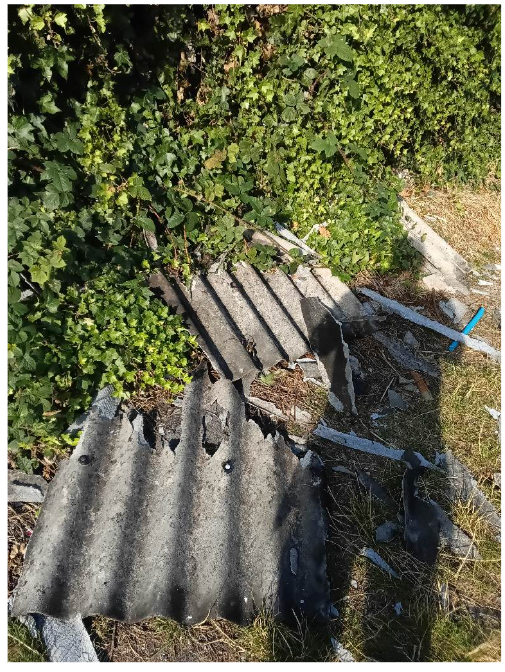
Fire and asbestos is one of the more demanding combinations in this industry. Heat damages asbestos-containing materials in ways that make them significantly more hazardous than they were in place — cement sheeting shatters and delaminates, bonded materials lose the matrix that held their fibres, and the resulting debris is scattered unpredictably by the fire itself, by firefighting water, and by wind in the hours afterwards.
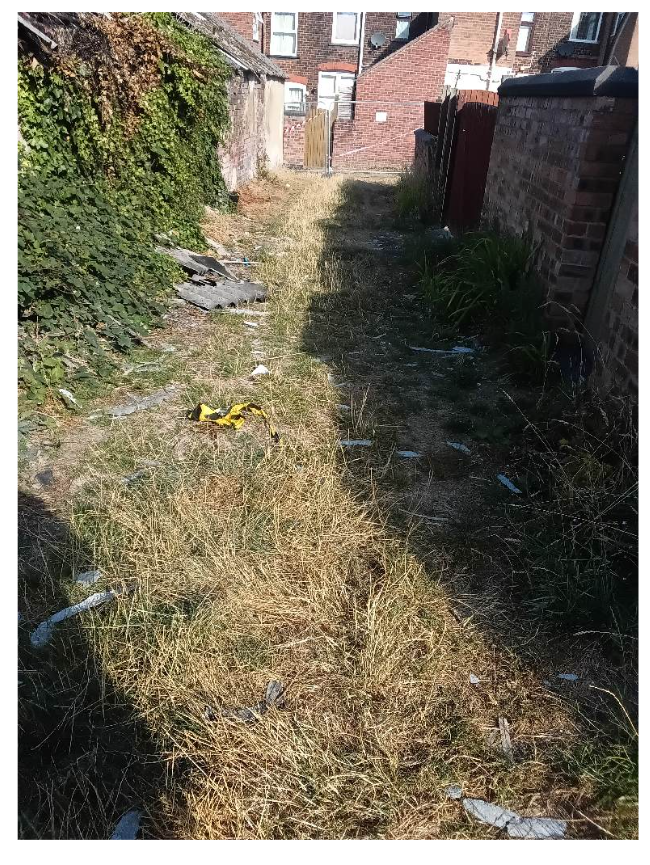
That means the affected area is rarely the building that burned. It's everything downwind of it: neighbouring gardens, alleyways, roofs, guttering and hard standing across multiple properties, none of which the residents chose to be involved in.
Scope of Works
The first priority on arrival was making the area safe and establishing the true extent of the spread. Once that was assessed, the works broke down into four distinct elements:
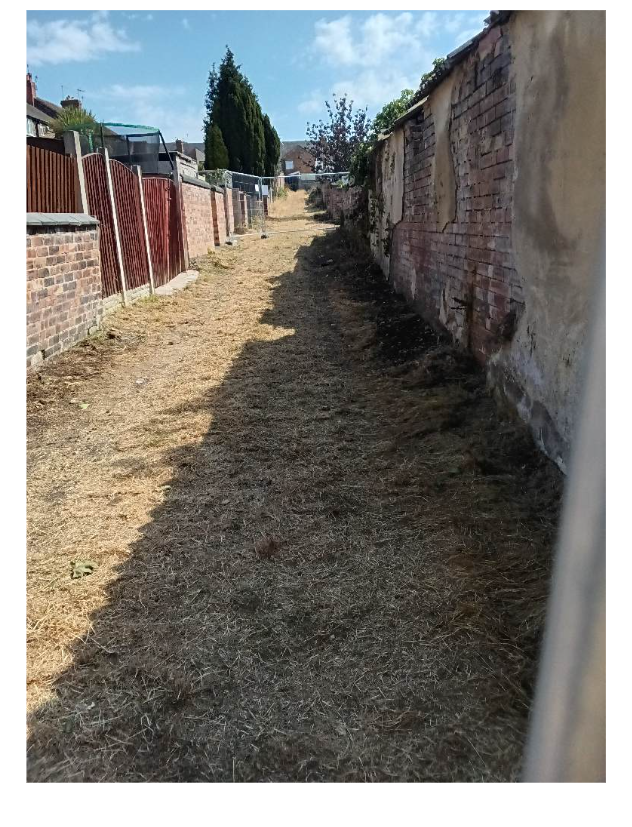
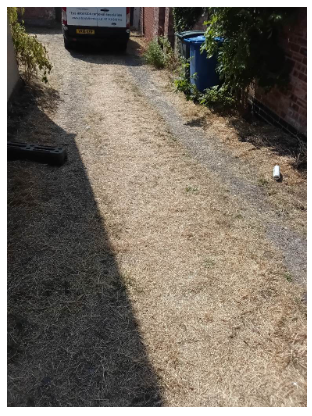
- Vegetation clearance — overgrown brush and grass throughout the alleyway was strimmed back. This isn't groundwork for its own sake: debris lodged in dense vegetation cannot be located or recovered, and leaving it in place means the contamination stays live indefinitely.
- Property cleaning — a thorough clean of the adjacent properties affected by the debris spread.
- Garden decontamination — specialist cleaning of affected gardens, where fragments had come to rest across lawns, borders and hard standing.
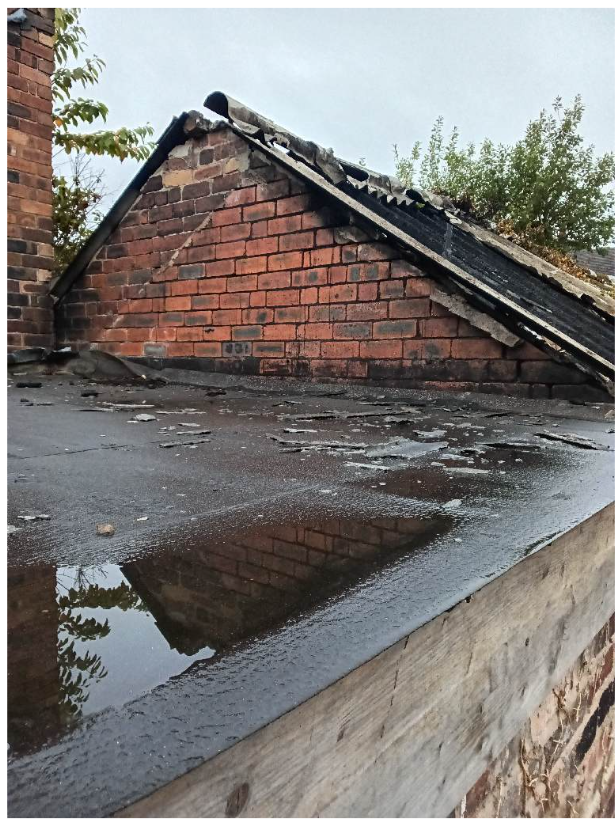
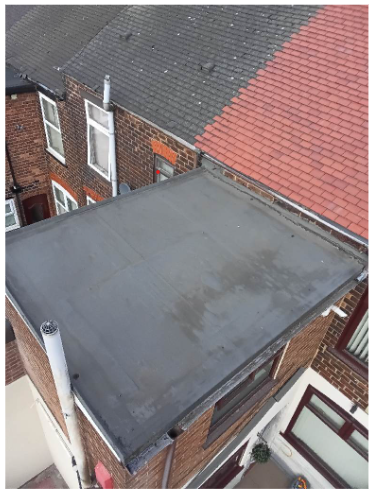
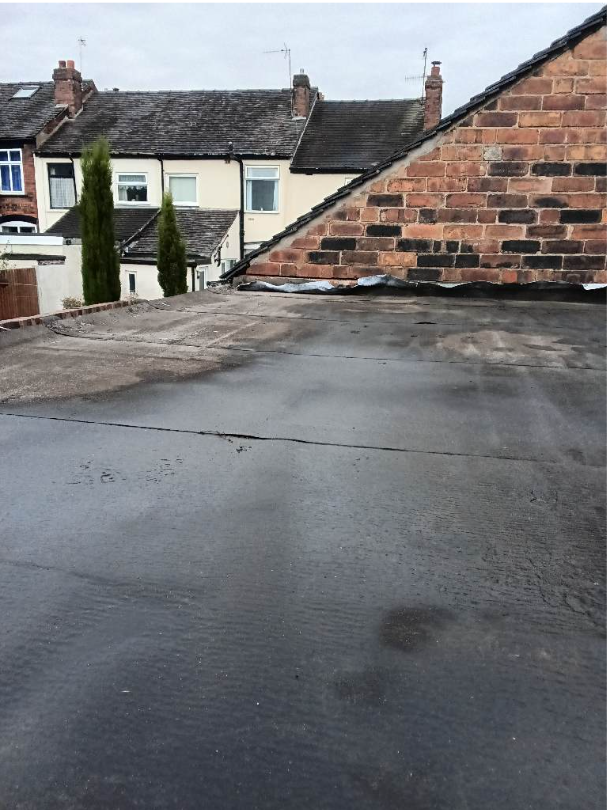
- High-level works — roof areas and guttering, where lighter debris tends to accumulate and where it will otherwise wash down into gardens and drainage over the following months.
All recovered material was double-bagged in UN-approved sacks and removed under our Environment Agency hazardous waste carrier registration, with consignment notes issued for every load.
Why the High-Level Works Mattered
Roof and gutter decontamination is the element most often overlooked after a fire, and it's the one that causes problems later. Lightweight fragments of fire-damaged asbestos cement travel furthest and settle on roofs and in guttering, where they're invisible from ground level.
Left in place, that material doesn't stay put. Rainfall gradually washes it down through the drainage, redistributing fragments into the gardens and hard standing that have just been cleaned. Residents can find themselves re-contaminated weeks after the works were supposedly finished, with no obvious explanation.
Dealing with high level properly at the same time as ground level is the difference between a clearance that holds and one that has to be repeated.
How the Work Was Carried Out
Everything was completed under controlled conditions in accordance with the Control of Asbestos Regulations 2012. Operatives worked in full PPE and RPE with appropriate decontamination arrangements, using wet methods throughout to suppress fibre release during recovery, and working systematically from the outer edge of the affected area inward so that cleaned ground wasn't re-crossed.
Because this was residential and occupied, the practical side mattered as much as the technical one. Residents needed to know what was happening in their gardens, when they could use them again, and that the material was being dealt with properly rather than tidied away.
The Outcome
The works were completed safely and efficiently, with all affected areas — alleyway, gardens, adjacent properties, roofs and guttering — thoroughly dealt with across the Stoke-on-Trent site. All waste was disposed of at a licensed facility with full documentation issued.
The project was managed on site by Mitchell Beardmore, Contracts Manager at AIB Solutions. A great effort from everyone involved in responding quickly and getting these important works completed for the local community.
If a Fire Has Spread Asbestos Debris
Fires in older buildings frequently disturb asbestos, and the affected area is usually much larger than people expect. If you're a resident, a landlord, a housing provider or a local authority dealing with the aftermath:
- Don't sweep, hose down or bag debris yourself. Fire-damaged asbestos is more friable than intact material, and disturbing it dry releases fibres.
- Keep people and pets off affected ground until the extent has been assessed.
- Don't assume the spread stops at the boundary. Check gardens, alleyways, roofs and guttering across neighbouring properties.
- Use an HSE-licensed contractor experienced in emergency response, not a general clearance firm.
- Keep the documentation. Consignment notes and clearance records will be requested by insurers and at any future property sale.
Related reading: fly-tipped asbestos cement and how we deal with it, and what happens when asbestos is disturbed.
Frequently Asked Questions
Is asbestos more dangerous after a fire?
Yes. Heat destroys the bonded matrix that normally holds fibres securely within materials like asbestos cement, making fire-damaged debris considerably more friable than the same material intact. It also fragments and scatters, so the contaminated area is usually far wider than the building that burned.
Who is responsible for clearing asbestos debris after a fire?
It depends on where the debris has landed. Property owners are generally responsible for their own land, which is why fire debris spreading across multiple properties can become complicated. Local authorities, housing providers and insurers are frequently involved. The practical answer is that it needs coordinating quickly by a licensed contractor rather than argued over while the material sits there.
Can I clean up asbestos debris in my own garden?
We'd strongly advise against it. Fire-damaged asbestos is friable, and sweeping, hosing or bagging it disturbs fibres. It also creates hazardous waste that cannot legally go in a household bin or a skip. Keep people and pets off the area and call a licensed contractor.
How quickly can you attend an asbestos emergency?
Same day in most cases. We're based in Newcastle-under-Lyme, minutes from Stoke-on-Trent, and cover Staffordshire, Cheshire and Shropshire. Emergency response — fire, flood, storm damage, vehicle impact — is work we mobilise for quickly, because leaving disturbed asbestos in a residential area is not something that can wait.
What happens to the waste?
All recovered material is double-bagged in UN-approved sacks, transported under our Environment Agency hazardous waste carrier registration and disposed of at a licensed facility, with a hazardous waste consignment note issued for every load as the legal record of correct disposal.