
The Job
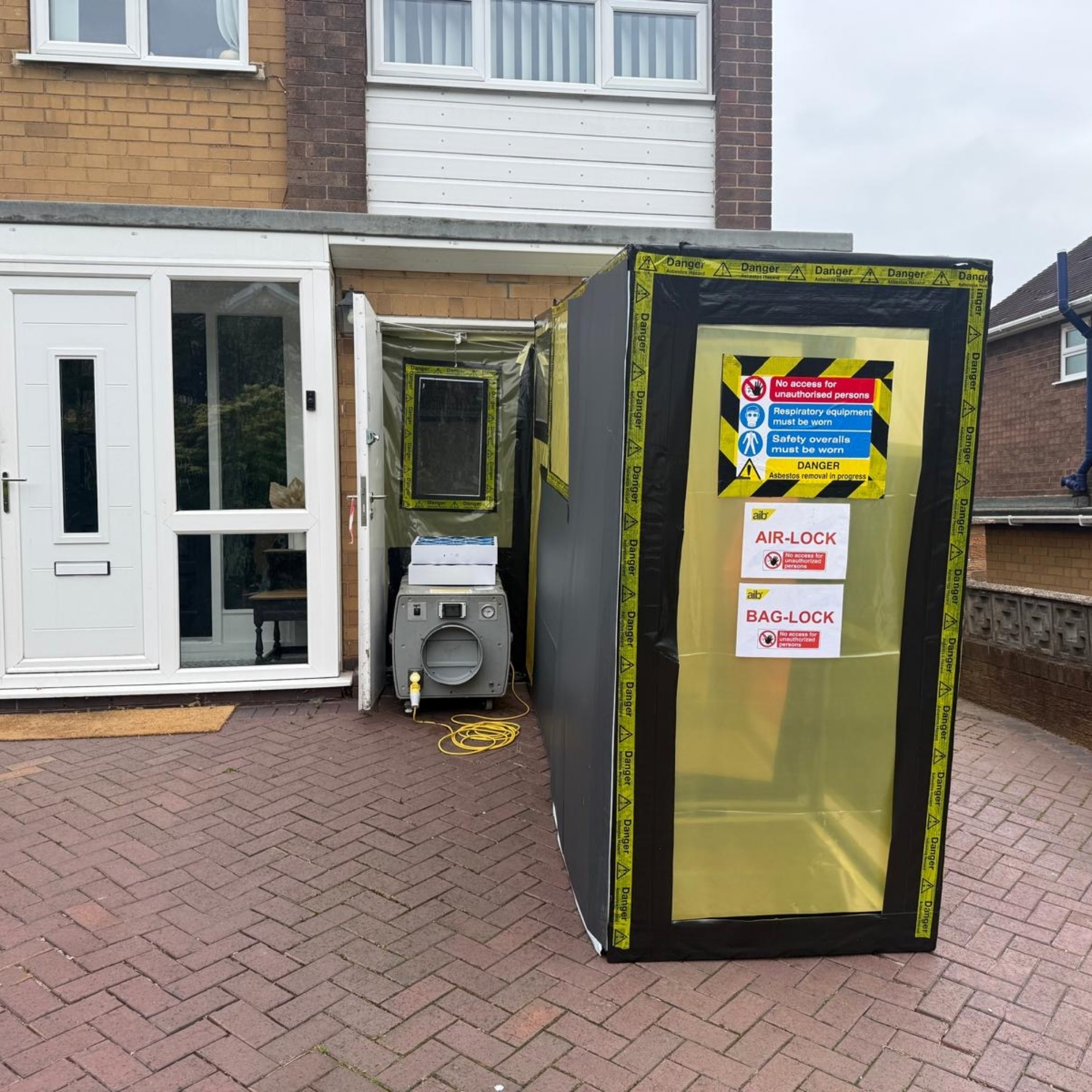
A residential property in Stockton Brook, Stoke-on-Trent. The client suspected that the ceiling of their garage contained asbestos — and they were right to take it seriously. The material appeared consistent with asbestos insulating board (AIB), which is one of the higher-risk asbestos-containing materials (ACMs) found in domestic properties.
Rather than proceeding straight to removal — which without proper identification risks disturbing a material that should be handled under full licensed conditions — the client contacted AIB Solutions for an asbestos audit as the first step. That is exactly the right approach.
Why AIB Requires a Careful Approach
Asbestos insulating board is a friable material — meaning it can release fibres easily when disturbed, cut, drilled or broken. Unlike asbestos cement, which is a bonded matrix where fibres are more tightly locked in, AIB has a softer, more open structure that makes it significantly higher risk when it comes to fibre release.
AIB was widely used in domestic and commercial construction from the 1950s through to the mid-1980s, most commonly as ceiling tiles, partition boards, fire-protective panels and airing cupboard linings. Garage ceilings — particularly in properties built during this period — are a common location. In many cases the material remains intact and in a stable condition, but that can only be confirmed by a professional assessment.
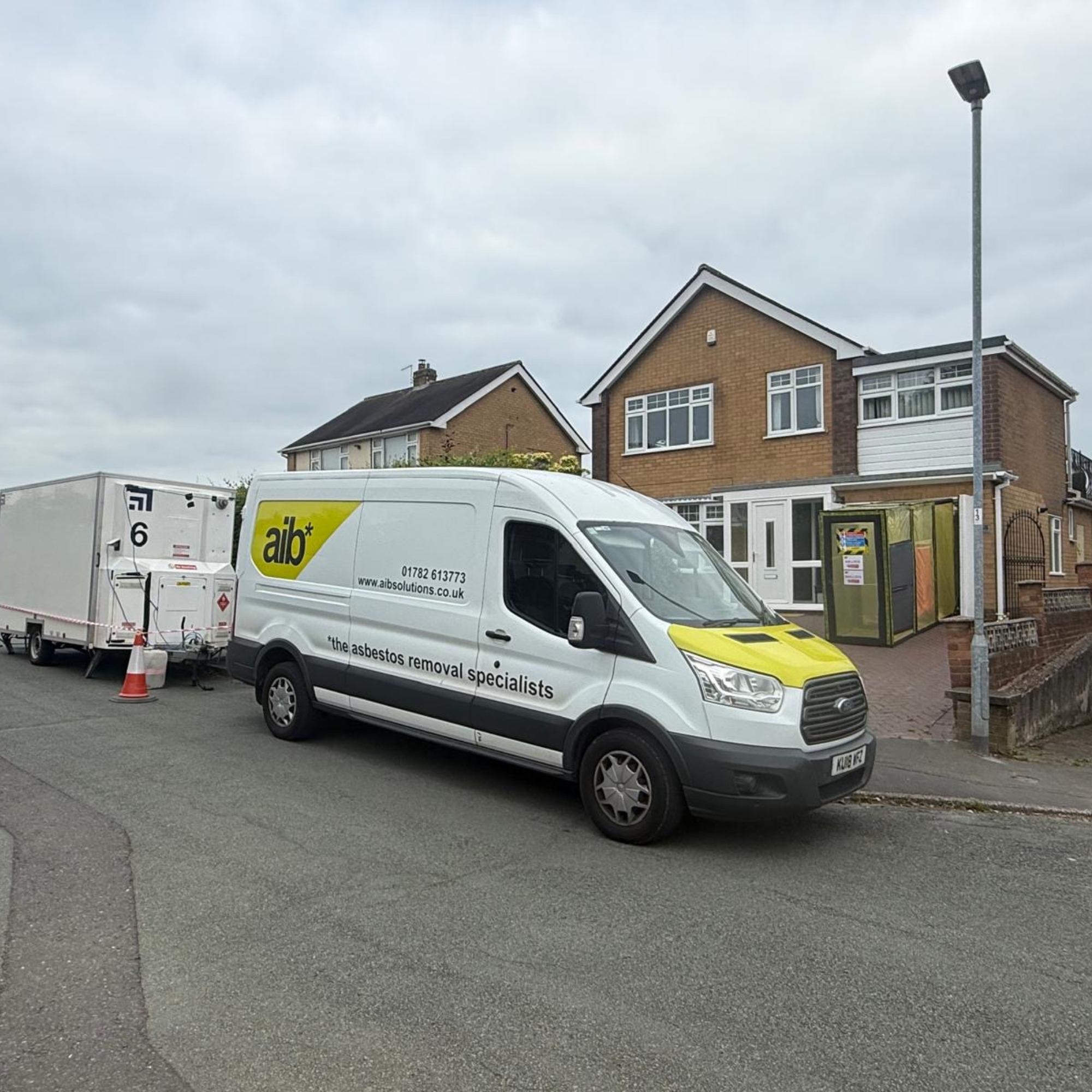
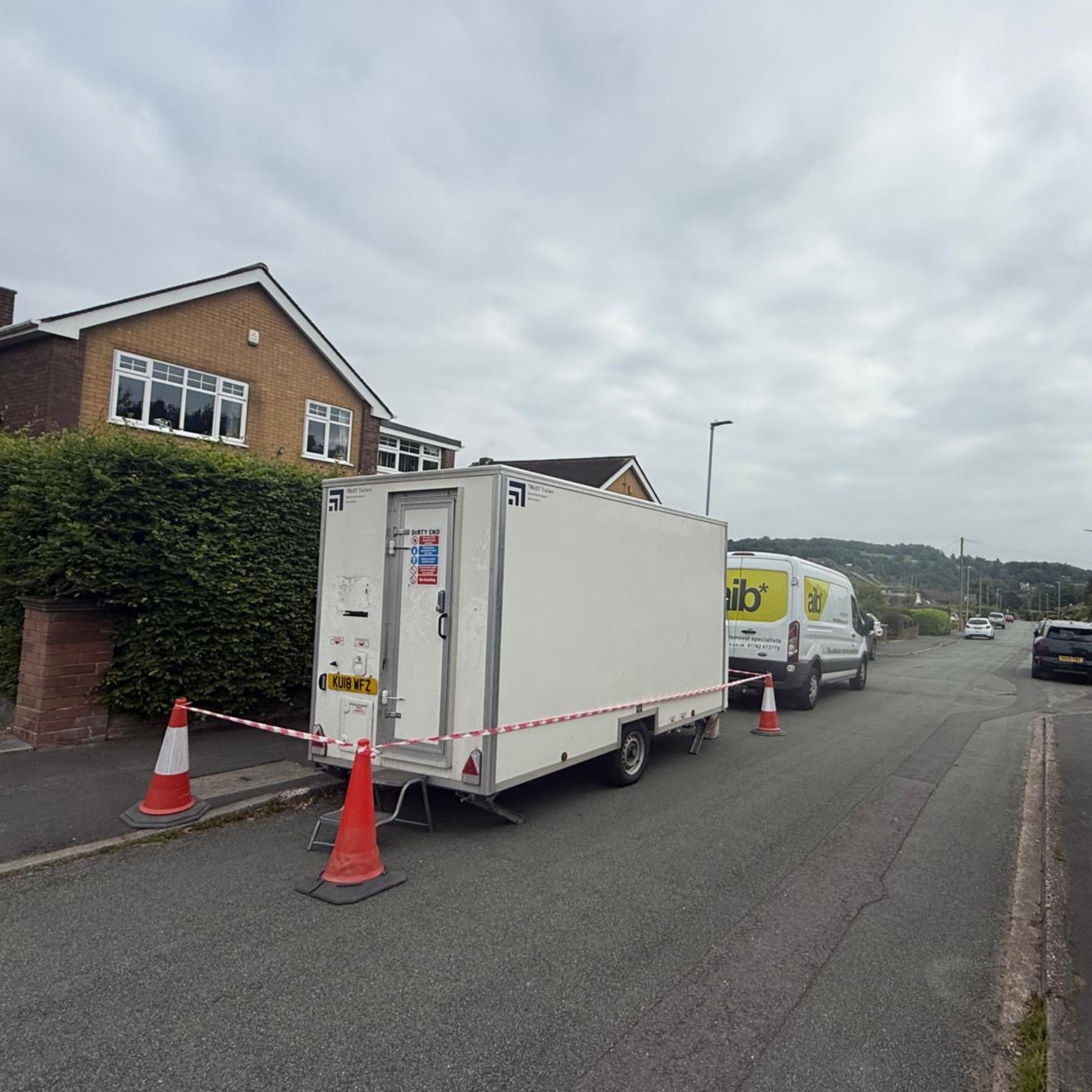
Removal of AIB is licensable work under the Control of Asbestos Regulations 2012 (CAR 2012). It must only be carried out by an HSE-licensed contractor, with mandatory notification to the HSE, full enclosure construction, negative pressure units and a four-stage independent air clearance procedure on completion. None of that can happen safely without knowing precisely what you are dealing with first.
Our Approach — The Asbestos Audit
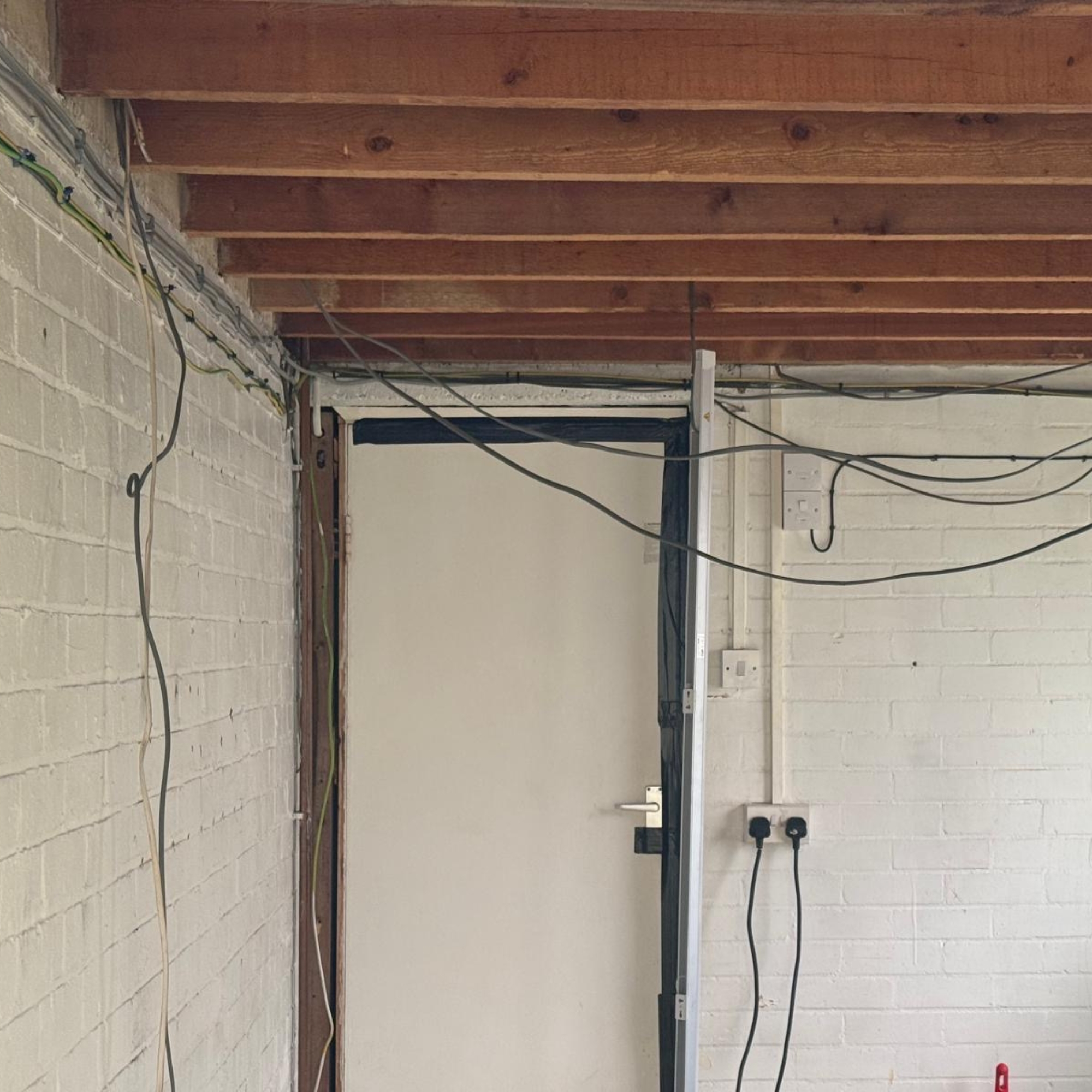
Our audit process is methodical and thorough. On arrival at the Stockton Brook property, our team assessed the garage ceiling material — its type, its extent, and critically, its current condition. Condition matters as much as identification: AIB in a stable, undisturbed state presents a lower immediate risk than AIB that is damaged, crumbling or has been disturbed.
The audit covers:
- Material identification — visual assessment of the material consistent with known ACM types, supported by sampling where confirmation is required
- Condition assessment — surface damage, delamination, water ingress, previous disturbance, proximity to building activity
- Risk level — scored against the standard risk assessment methodology to give a clear picture of priority
- Recommended course of action — leave in place and monitor, encapsulate, or proceed to licensed removal
Where samples are required to confirm the material, they are collected on site and sent to a trusted UKAS-accredited laboratory for analysis. Results are typically returned within 24 to 48 hours with a legally valid analysis certificate.
The Outcome
The Stockton Brook audit gave the client exactly what they needed — a clear, documented assessment of the AIB ceiling, its current condition, the associated risk level and a straightforward recommendation for the safest way forward. Where licensed removal is subsequently required, AIB Solutions carry out that work in full compliance with CAR 2012 as the client's single point of contact throughout.
It is the kind of methodical, licensed approach we have been trusted with since 2005. Over 40,000 jobs completed. The same process every time.
If You Have a Similar Property
If you have a garage, loft, airing cupboard or utility room in a pre-2000 property and you suspect the ceiling or wall panels may contain asbestos — an audit is the right place to start. Do not disturb the material, drill into it or attempt to remove it before a professional assessment has been carried out.
AIB Solutions are based in Newcastle-under-Lyme, minutes from Stockton Brook and covering all of Stoke-on-Trent and Staffordshire. Same-day response, free expert advice, no obligation.