
The Project
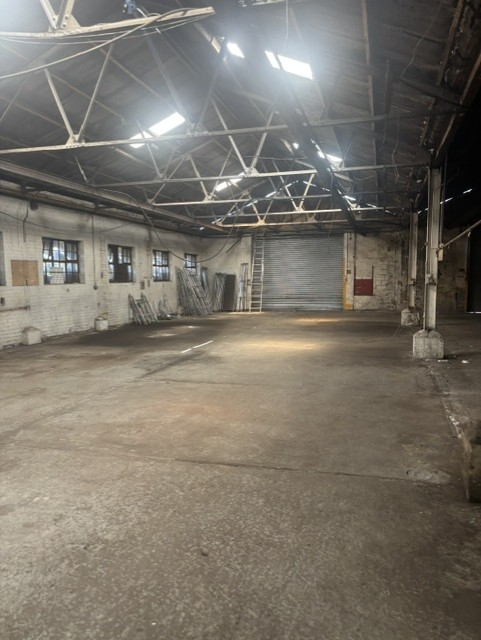
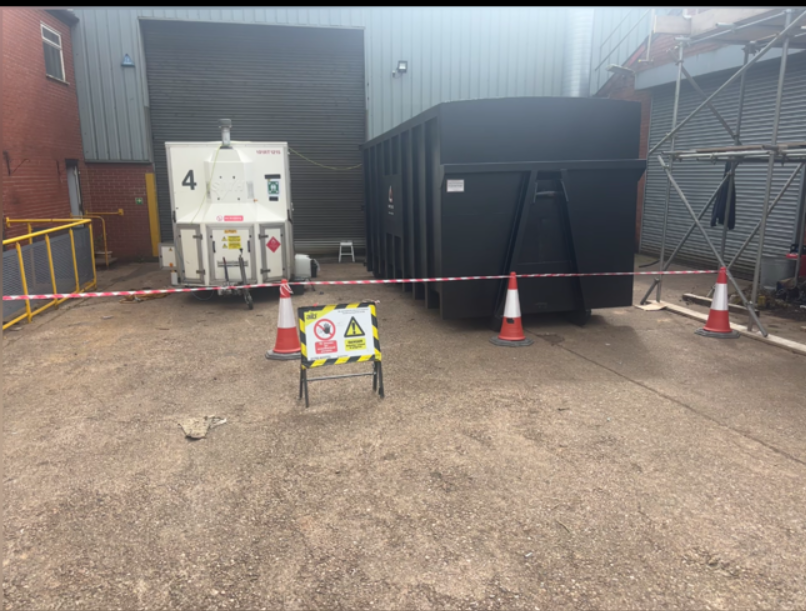
A property developer engaged us for the safe removal and disposal of asbestos insulating board (AIB) ahead of a full building restoration in Stoke-on-Trent — a project that happened to land in the middle of the recent heatwave.
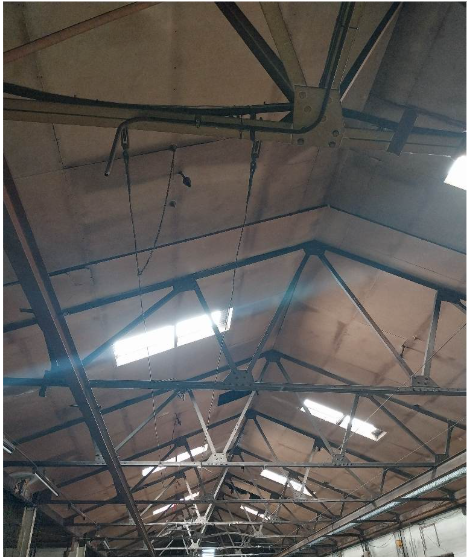
Restoration and conversion projects are among the most common reasons AIB removal is needed. Buildings being brought back into use were almost always built or refurbished during the decades when AIB was standard specification, and it turns up in ceilings, partitions, soffits, boxing and fire-stopping. It has to come out before the interesting work — the new roof, the restoration itself — can begin.
AIB is licensable under the Control of Asbestos Regulations 2012. It's friable, meaning it releases fibres readily when disturbed, and removal may only be carried out by an HSE-licensed contractor under fully controlled conditions.
Working Through the Heatwave
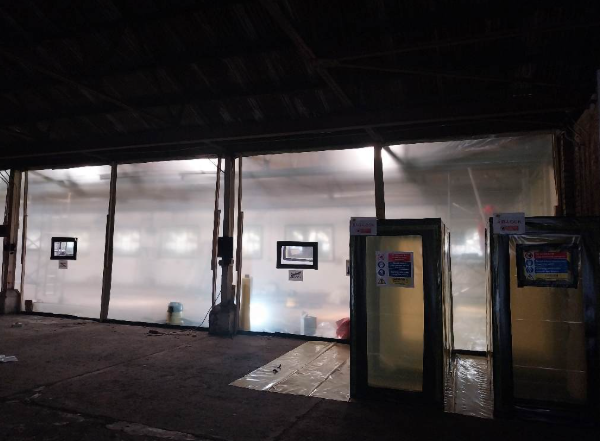
Licensed asbestos removal is physically demanding at the best of times. Operatives work in full-face respiratory protective equipment and disposable coveralls, inside sealed enclosures under negative pressure, where there is no airflow by design. In ordinary conditions that's hard work. In a heatwave it becomes a genuine health and safety consideration in its own right.
Heat stress is a real and well-documented risk in this trade, and it doesn't get talked about enough. Coveralls are non-breathable, RPE adds resistance to every breath, and an enclosure at negative pressure has no cooling. The internal temperature can climb well above ambient. Rushing to finish early — the instinctive response — is precisely the wrong answer, because that's when mistakes and shortcuts happen.
The team adapted the working pattern instead: starting early each morning to get the heaviest work done ahead of the day's peak temperatures, with the schedule structured around the conditions rather than fighting them. Work continued to be carried out safely and efficiently throughout, with no compromise to the control measures the job required.
The Licensed Process
Every stage followed the statutory sequence required for licensable asbestos work:
- Plan of work — written methodology covering removal technique, enclosure design, control measures and waste handling, produced before mobilisation.
- HSE notification — the mandatory 14-day notification submitted under Regulation 9 of CAR 2012.
- Controlled removal — full enclosure with negative pressure, wet methods to suppress fibre release, full PPE and RPE, and immediate double-bagging of arisings in UN-approved sacks.
- Waste disposal — all material removed under our Environment Agency hazardous waste carrier registration to a licensed facility, with consignment notes issued for every load.
- Clearance and certification — independent four-stage clearance and a Certificate of Reoccupation before handback.
For a fuller walkthrough from the client's perspective, see what professional asbestos removal involves.
Why Developers Deal With Asbestos First
On any restoration or conversion project, asbestos sits on the critical path. It has to be resolved before roofing, before structural work, before fit-out — and the statutory 14-day HSE notification period on licensed material means it cannot be squeezed in at short notice.
The developers who have the easiest time of it are the ones who get a Refurbishment & Demolition survey done at design stage, not once contractors are mobilised. Surveyed early, asbestos is a scheduled line item with a known cost and a known duration. Discovered mid-programme, it stops everything: work halts, the notification clock starts, plant and labour stand idle, and the delay usually lands in a contractual dispute about who carries it.
Under CAR 2012 an R&D survey is legally required before refurbishment or demolition on any building that may contain asbestos. Surveys are arranged through our trusted, qualified surveying partners, and we coordinate the survey, the results and the removal that follows as a single point of contact. More detail in our contractors' guide to asbestos management and on our construction services page.
The Outcome
All AIB was removed and disposed of safely from the Stoke-on-Trent site, with the works completed to a high standard and full documentation issued to the client. The building was handed back cleared and certified, ready for the restoration programme to continue.
The project was managed on site by Mitchell Beardmore, Contracts Manager at AIB Solutions. A massive well done to all the lads for pulling together and putting in a great effort despite the heat. We're looking forward to seeing the finished building once the new roof is on and the property has been fully restored.
Frequently Asked Questions
Why does AIB removal need a licensed contractor?
Asbestos insulating board is friable — it releases fibres readily when disturbed, unlike bonded materials such as asbestos cement. Under CAR 2012 it is licensable work, which means it may only be removed by an HSE-licensed contractor following a 14-day HSE notification, under full enclosure with negative pressure, and with independent four-stage clearance before reoccupation.
How long does AIB removal take on a restoration project?
The statutory 14-day HSE notification period applies before licensed work can begin, so that's the minimum lead time from instruction. The removal itself depends on the quantity, the access and whether the building can be fully enclosed or needs phasing. Early engagement is what keeps it off the critical path.
When should a developer arrange an asbestos survey?
At design stage, before contractors are mobilised. A Refurbishment & Demolition survey is legally required before refurbishment or demolition on any building that may contain asbestos, and surveying early turns asbestos into a scheduled line item rather than a mid-programme stoppage.
Does hot weather affect asbestos removal work?
It affects how the work is scheduled, not the standard it's carried out to. Operatives work in full RPE and non-breathable coveralls inside sealed enclosures under negative pressure, where heat builds quickly. The control measures can't be relaxed, so the working pattern flexes instead — early starts and adjusted hours to keep the heaviest work ahead of peak temperatures.
What documentation is issued on completion?
The plan of work, the HSE notification record, hazardous waste consignment notes for every load, and the independent four-stage clearance certificate with Certificate of Reoccupation. Developers should retain all of it — it will be requested during sale, warranty and any future works on the building.
Do you work with property developers regularly?
Yes. Restoration, conversion and refurbishment projects are a significant part of our work, alongside main contractor partnerships on larger schemes. See our construction services page for how we typically work alongside development programmes.