
The Call-Out
The Falcon Works on Sturgess Street is one of Stoke-on-Trent's surviving pot banks — a Grade II listed complex of warehouses and bottle kilns dating from around 1870, and part of the built history that makes the city what it is. It has also been empty for decades and has suffered repeated fire damage over the years.
By the time we were called, part of the building had been left in an unsafe condition and required emergency demolition. The problem was that asbestos-containing materials were still in place at high level, and until they were removed nothing else could proceed. The demolition contractor couldn't touch the structure, the site couldn't be made safe, and the client was carrying the risk of an unstable listed building in a residential area. It was not a job that could sit in a diary for a fortnight.
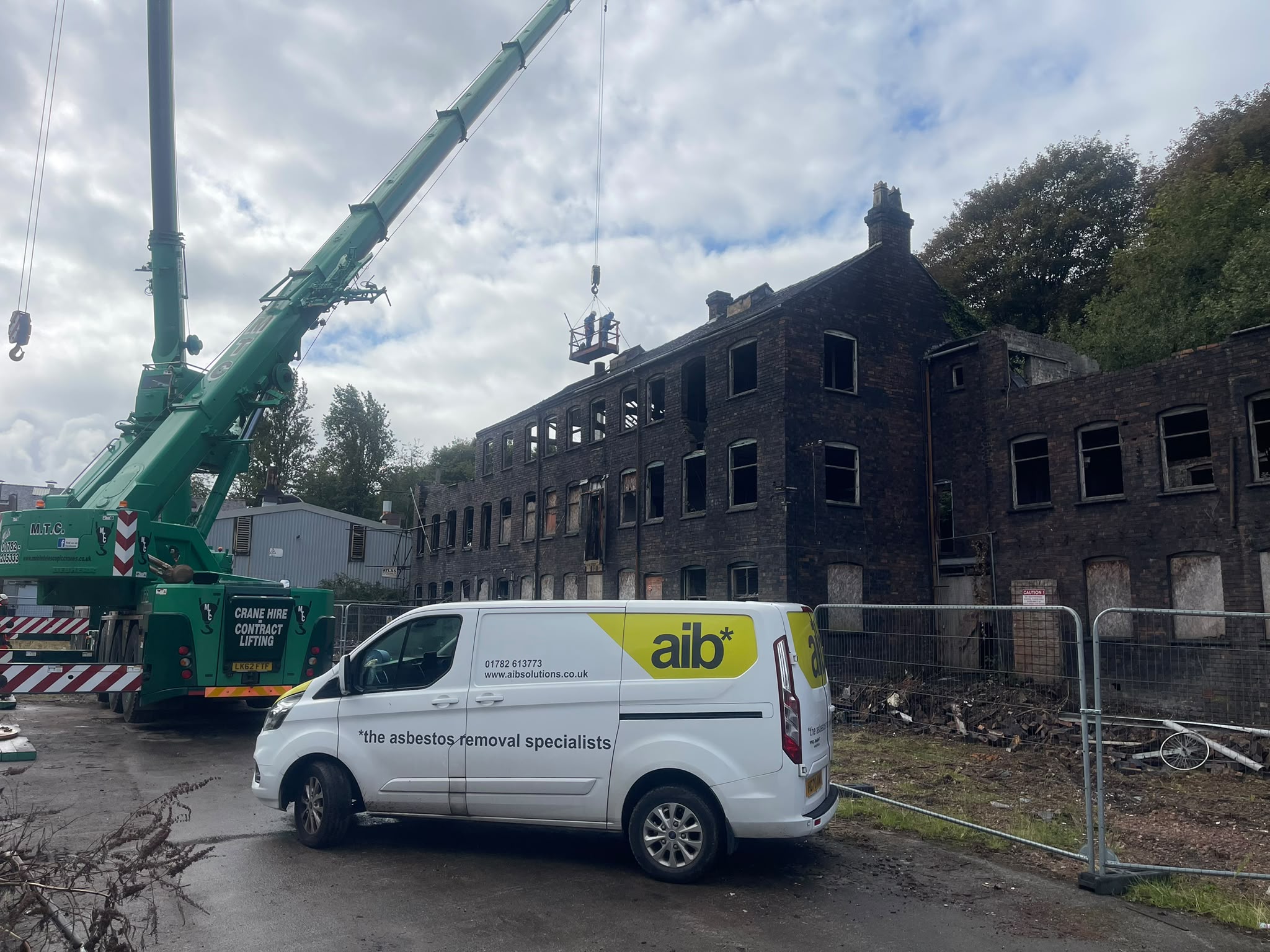
Plan of Work Written and On Site Within One Hour
Within one hour of the call coming in, Mitch Beardmore had completed the Plan of Work and was on site.
That deserves explaining, because it's the detail most people outside the industry will skim past. A Plan of Work is not a quote or a method statement knocked up on a phone. Under the Control of Asbestos Regulations 2012 it is the legally required written document that sets out exactly how licensed asbestos work will be carried out — the materials involved, the removal methodology, the control measures, the equipment, the decontamination arrangements, the waste route and the emergency procedures. It has to be specific to that building, that material and that access situation. A generic document is worthless and, in an HSE inspection, worse than worthless.
Producing one properly for high-level cement panels on a fire-damaged listed structure, and being stood on site with it inside sixty minutes, is only possible with genuine experience of this exact type of work. There is no shortcut and there is no template that does it for you.
The Access Problem
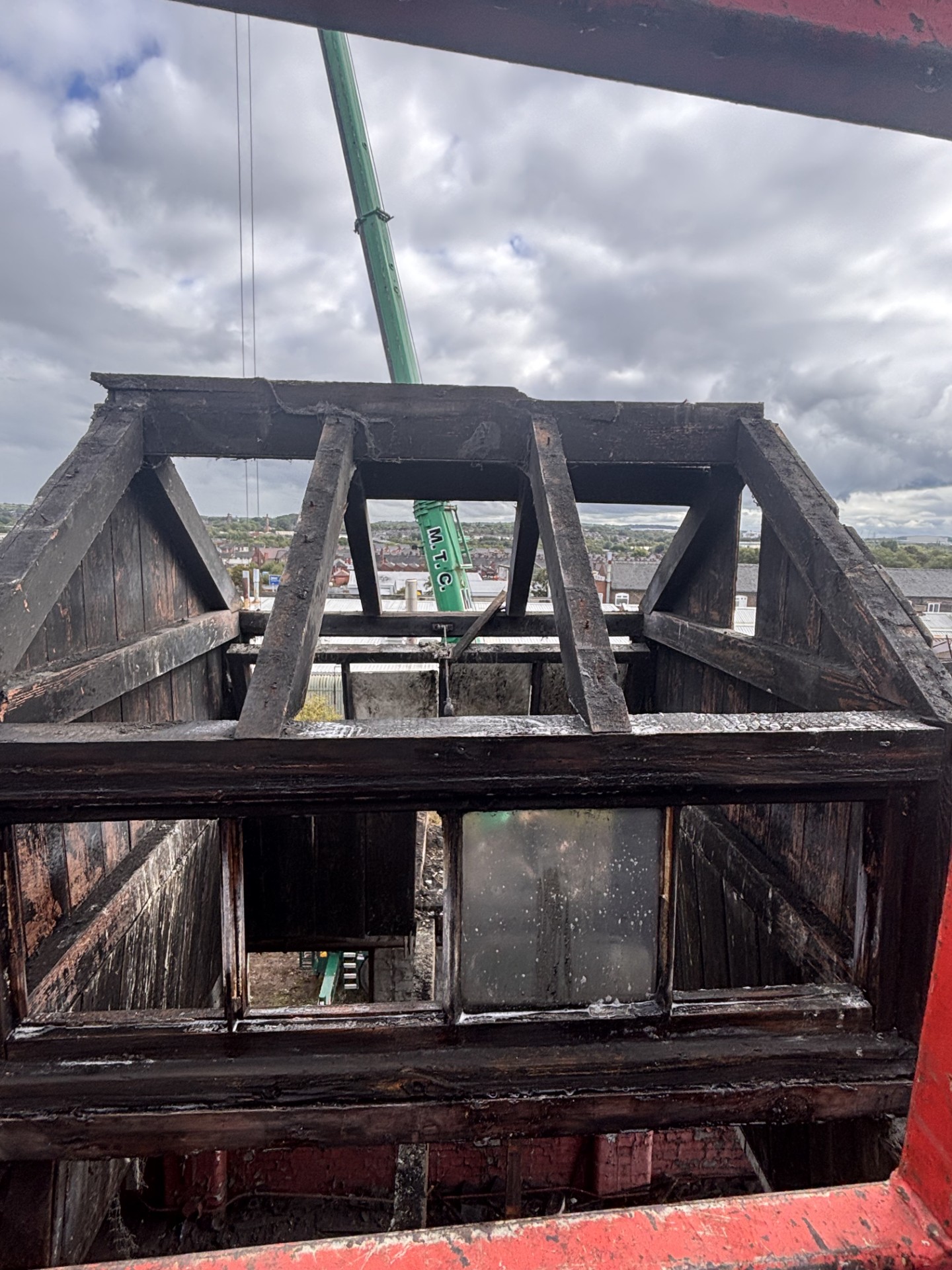
The asbestos cement panels were at high level, in what can fairly be described as an extremely awkward position. The building itself could not be relied upon — the roof structure was fire-damaged and the elevation was exactly the part that had been condemned as unsafe. Anything that involved putting operatives onto or inside that structure was off the table immediately.
Scaffolding, the usual answer to working at height, was equally problematic. Tying scaffold into a structurally compromised listed building carries its own risk, and the ground conditions and surrounding site constraints made a conventional scaffold both slow to erect and difficult to justify. On a job where the whole point was speed, a week of scaffold erection ahead of a day of removal makes no sense.
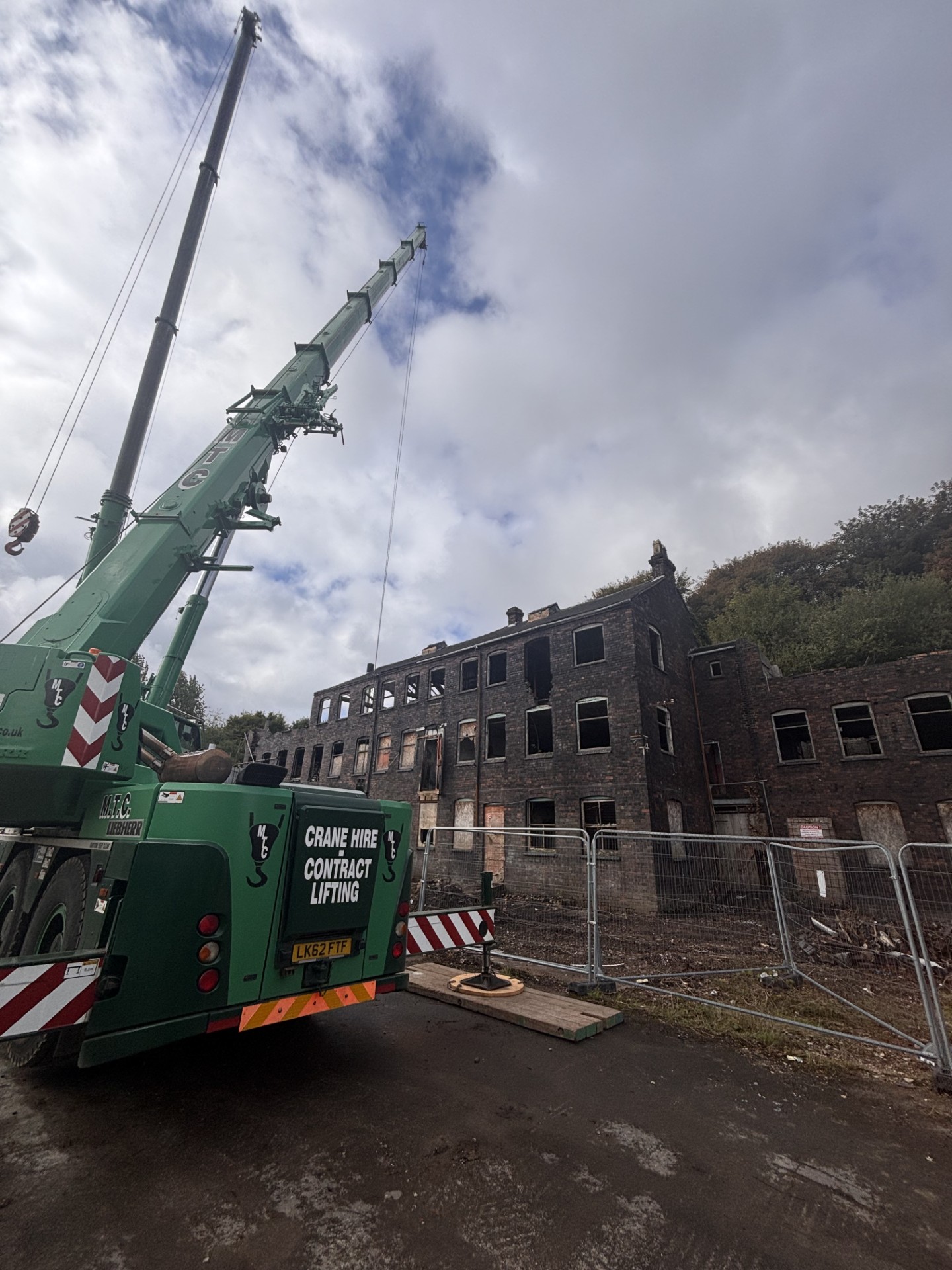
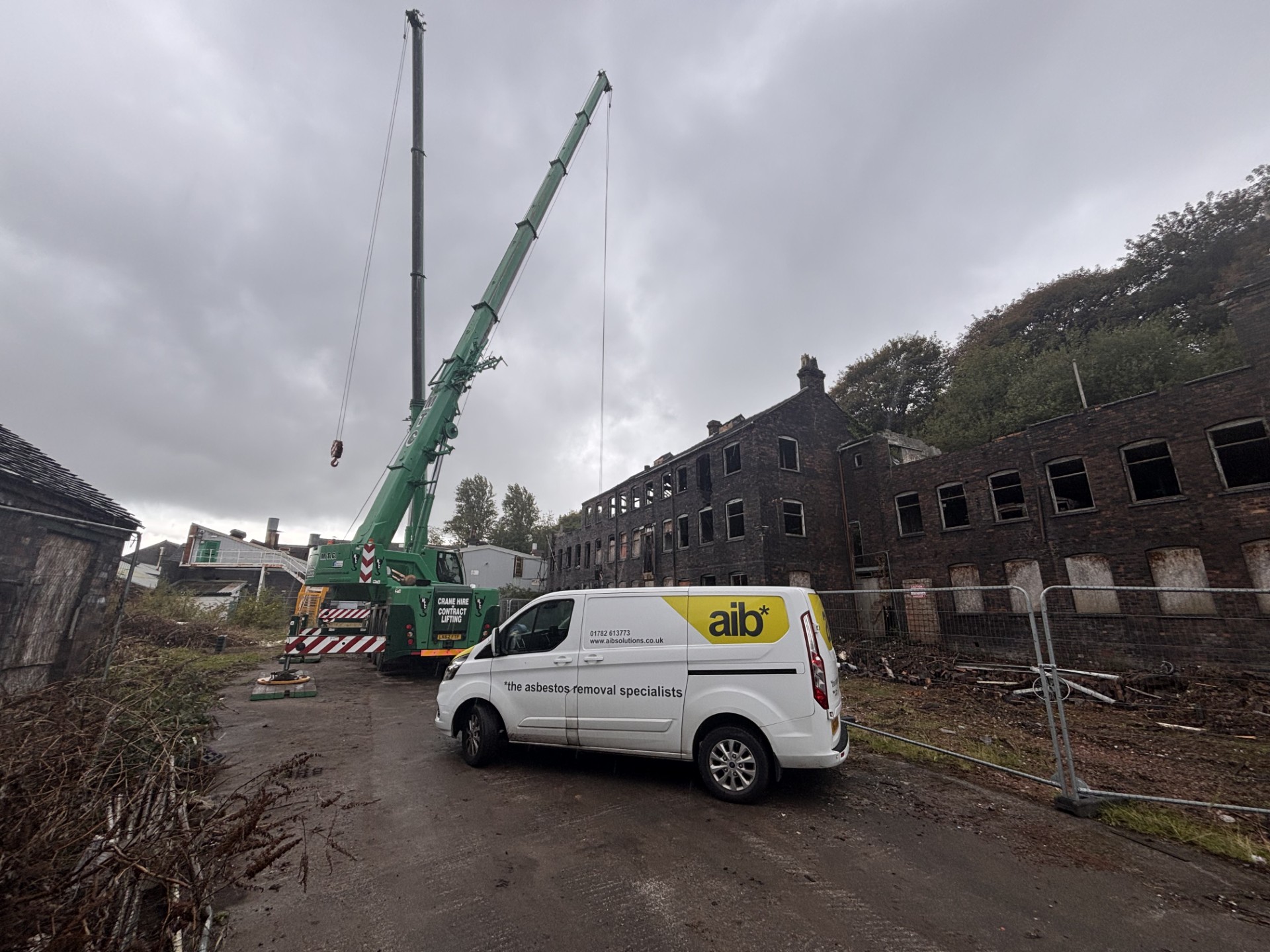
Crane and Man Basket
The solution was a contract lift with a crane-mounted man basket. Operatives were lifted to the panels and worked from the basket, with no load placed on the damaged structure at any point and no need to occupy the unsafe building at all.
A man basket lift is a controlled operation in its own right. It runs under a lift plan with an appointed person, a trained slinger and crane operator, and the basket suspended on a properly rated arrangement — it is not simply a platform on a hook. Combining that with licensed asbestos removal means two sets of controls running simultaneously, each with its own documentation, and the two have to agree with one another. The Plan of Work has to account for how the operatives get there, how they decontaminate, how the waste comes down and what happens if the work has to stop mid-lift.
The trade-off is worth it. Where a scaffold would have taken days and loaded a condemned structure, the crane put the team exactly where they needed to be, safely, in a single mobilisation.
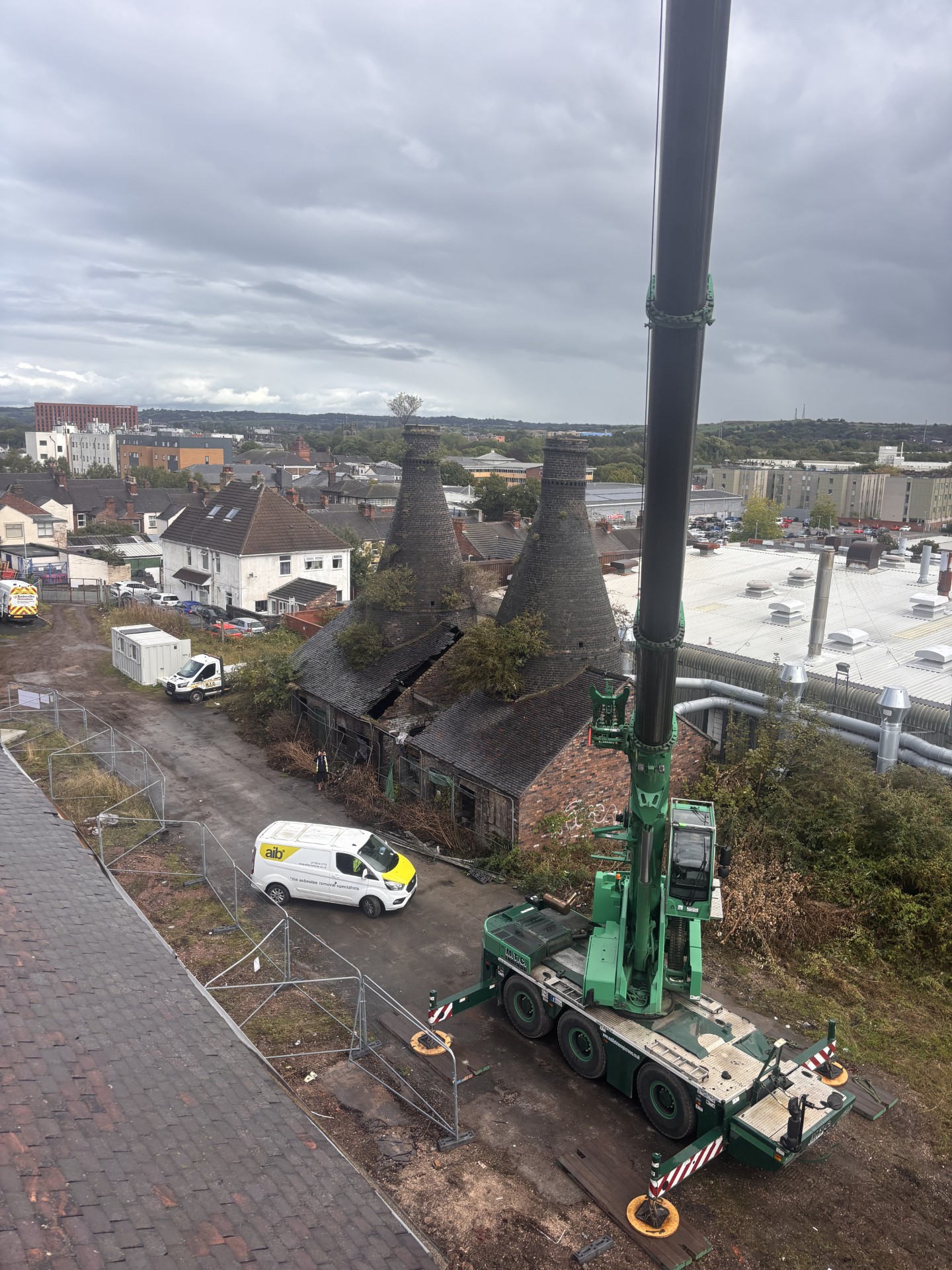
Why Battery-Powered Vacuums
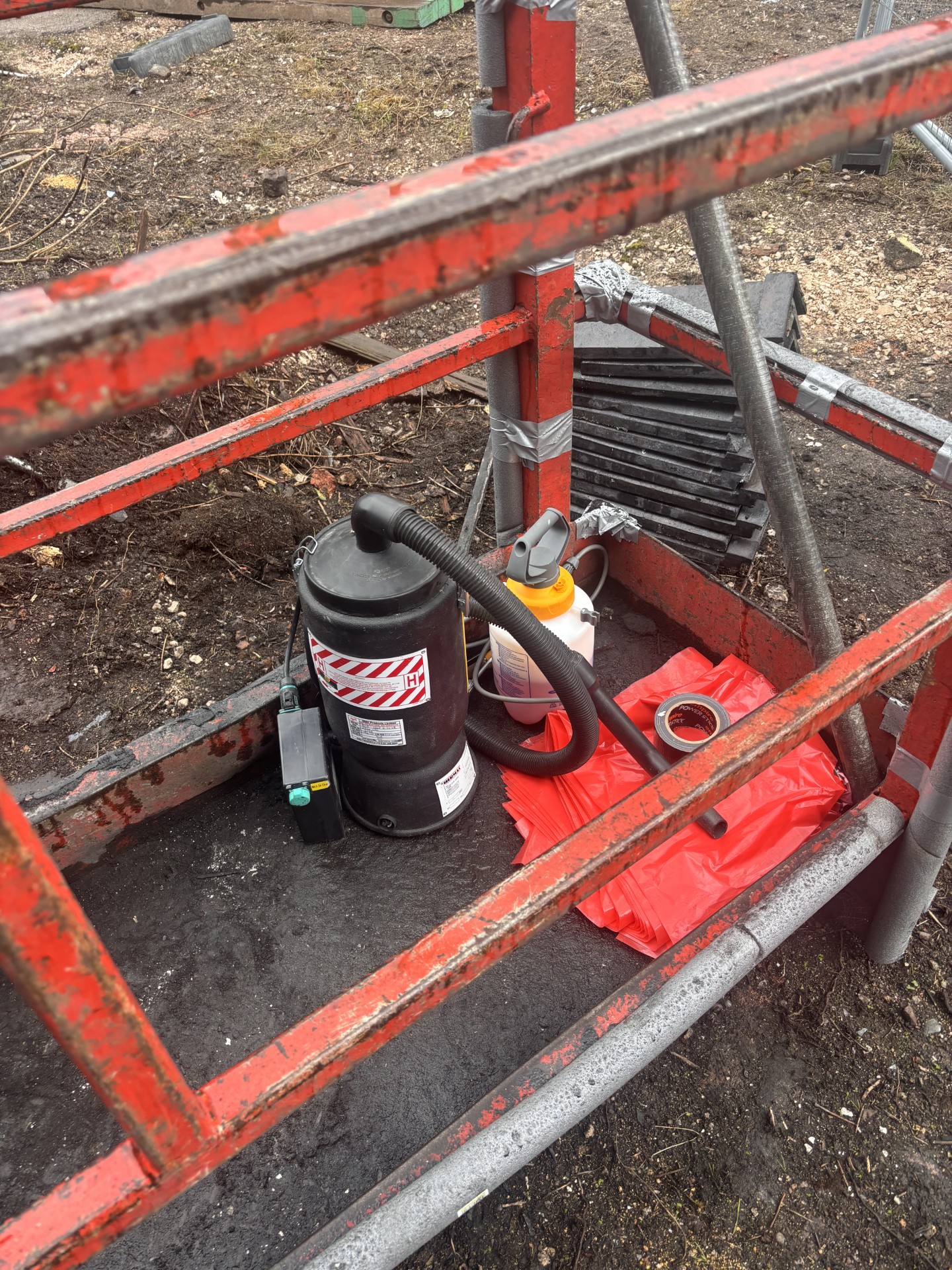
The works were completed with the assistance of battery-powered handheld H-class vacuums, and that choice tells you a lot about the site.
Conventional Type H vacuums run on mains power. On a derelict site there is no supply, and running generator leads up to a suspended man basket is neither practical nor safe — trailing cables from a basket that is moving on a crane hook is a hazard you simply design out. Battery units remove the cable entirely.
They matter for a second reason. Asbestos cement panels that have been through a fire and decades of weathering are not the sound, bonded sheets they were when installed. They are brittle, they break on handling and they shed debris. Having H-class extraction in the basket means residues are captured at the point they're generated, rather than falling to ground level across a site that other trades would shortly be working on.
Working on a Listed Building
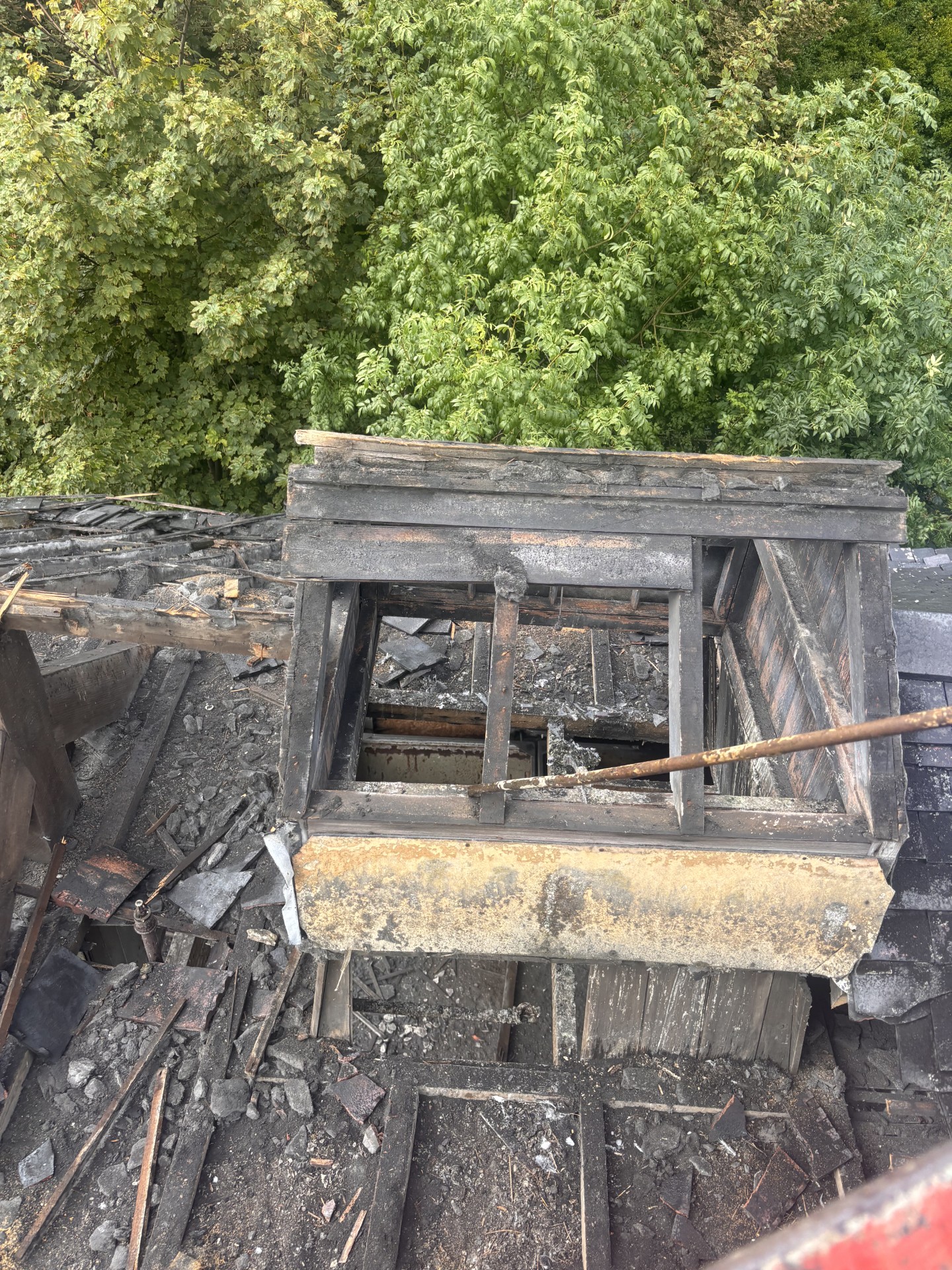
Listed status does not disappear because a building has been damaged. It changes how the work is planned: removal methods that would be acceptable on an ordinary industrial shed — breaking out, pulling down, mechanical demolition around the material — have to be reconsidered where surviving historic fabric sits alongside the asbestos.
At Falcon Works this meant taking panels down in a controlled manner from the basket rather than allowing them to be brought down with the structure. It is slower per panel. It is also the only approach that leaves the demolition contractor with a clean starting point and doesn't create a much larger contaminated area for somebody to deal with afterwards.
The Outcome
The high-level asbestos cement panels were removed safely and the site handed back so that the emergency demolition and wider works could proceed without delay. All waste was double-bagged in UN-approved sacks, removed under our Environment Agency hazardous waste carrier registration and disposed of at a licensed facility, with a consignment note issued for every load.
The project was planned and led on site by Mitchell Beardmore, Contracts Manager at AIB Solutions, with a great effort from the operatives working at height and from the contract lift team. Getting a building of this significance to a safe position quickly, without incident, is exactly the sort of work this company was built to do.
If Asbestos Is Holding Up Your Demolition
Asbestos discovered on an unsafe or fire-damaged structure is one of the most common reasons a demolition programme stalls. If you're a demolition contractor, a developer, a building owner or a local authority in that position:
- Call a licensed contractor before the structure moves. Once ACMs come down with the building you are dealing with a contaminated site rather than a removal job, and the cost multiplies.
- Ask how quickly a Plan of Work can be produced. Mobilisation speed in licensed asbestos work is governed by the paperwork, not the van. A contractor who cannot turn a compliant, site-specific Plan of Work around quickly cannot genuinely respond quickly.
- Raise access constraints on the first call. Height, unsafe structure, restricted ground — these determine whether the answer is scaffold, MEWP or a contract lift, and they change the programme far more than the volume of material does.
- Check listed or heritage status early. It affects method, consents and what the demolition contractor is permitted to do around the material.
- Keep every consignment note. They are the legal record of correct disposal and will be requested by insurers, funders and at future sale.
Related reading: our emergency fire debris response in Stoke-on-Trent, and asbestos cement removal and disposal.
Frequently Asked Questions
What is a Plan of Work for asbestos removal?
A Plan of Work is the written document required under the Control of Asbestos Regulations 2012 before licensed asbestos work begins. It sets out the materials involved, the removal method, control measures, equipment, decontamination arrangements, waste route and emergency procedures for that specific site. It must be site-specific — a generic document does not meet the requirement — and it is one of the first things an HSE inspector will ask to see.
How quickly can asbestos be removed in an emergency?
Faster than most people expect, provided the contractor is properly licensed and experienced. At Falcon Works the Plan of Work was completed and our Contracts Manager was on site within one hour of the call. Licensed work on higher-risk materials also requires 14 days' notification to the HSE, though the regulations allow that period to be waived in genuine emergencies where a delay would create a greater risk. What cannot be skipped is the planning itself.
Why use a crane and man basket instead of scaffolding?
Where a structure is fire-damaged or unsafe, scaffolding may not be able to be tied in, and erecting it can take days on a job where the whole point is speed. A crane-mounted man basket places operatives at the material without loading the damaged building at all. It requires a lift plan, an appointed person and trained crane and slinging personnel, and runs alongside the asbestos controls rather than in place of them.
Is fire-damaged asbestos cement more dangerous than undamaged cement?
Yes. Heat degrades the cement matrix that binds the fibres, so fire-damaged sheeting is more brittle and more likely to fragment and release fibres when handled than the same material intact. It should never be broken out, dropped or handled by anyone other than a licensed contractor using controlled methods.
Can asbestos be removed from a listed building?
Yes, and it frequently has to be. Listed status does not prevent removal but it does shape the method, because the surviving historic fabric has to be considered alongside the asbestos. In practice that usually means slower, more controlled removal rather than mechanical methods, and early conversations with the client about any consents required.
Who pays for emergency asbestos removal on a derelict building?
Responsibility normally sits with the building owner or the duty holder under Regulation 4 of CAR 2012, though on fire or structural-damage incidents insurers, demolition contractors and local authorities are frequently involved. The practical advice is not to let the question of who pays delay making the site safe — get a licensed contractor to scope the work, then resolve the commercial position with a clear price in front of you.